

How long do drugs stay in your system?
Most drugs show in urine for about two to four days and in hair for about three months. Windows for tik, CAT, cocaine, mandrax, nyaope, Xanor, codeine and heroin, by test type, with South African lab figures from Ampath.

Most drugs show up in a urine test for about two to four days after the last use, according to the US federal guide to drug testing in treatment (SAMHSA, 2012), and a hair test looks back about three months. In South Africa, Ampath’s July 2024 leaflet gives mandrax a urine window of 90 to 225 hours, and its standard 10-panel rapid cassette does not pick up CAT, ecstasy or mandrax at all. At Renewed Life Center in Cape Town we test clients on arrival and at random, so these windows are part of how we work.
Found something at home, or waiting on a result? Message us on WhatsApp and we will help you make sense of it. Free, confidential, and we reply the same day.
How long do drugs stay in your system?
For most drugs, about two to four days in urine, a day or two in blood and saliva, and about three months in hair. Daily or heavy use stretches the urine window to around a week, and for a few drugs, such as benzodiazepines and cannabis, much longer.
The type of sample matters more than most people expect. A review in Therapeutic Drug Monitoring found that “the detection time is longest in hair, followed by urine, sweat, oral fluid, and blood”. The same review puts a single dose at 1.5 to 4 days in urine and about a week in chronic users, 5 to 48 hours in saliva, and 1 or 2 days in blood (Verstraete, 2004).
| Sample | Usual detection window | What it is good for |
|---|---|---|
| Urine | 1.5 to 4 days after one dose; about a week in daily users | Home kits, workplace and lab screening |
| Saliva | 24 to 48 hours | Use in the last day or two |
| Blood | 1 to 2 days | Very recent use; not the sample of choice for suspected street-drug use |
| Hair | About 3 months of growth, at roughly 1 cm a month | A pattern over months, not last weekend |
Sources: Verstraete, Therapeutic Drug Monitoring, 2004 (urine, saliva, blood); SAMHSA, Clinical Drug Testing in Primary Care, TAP 32, 2012 (saliva 24 to 48 hours, hair).
Blood is the sample South African labs steer families away from. Lancet Laboratories’ 2015 guide says that because street drugs are used irregularly and “get eliminated from the blood relatively quickly, it is not the sample of choice” for suspected drug use. Hair works the other way round: the US guide notes it suits a long history “but is not suited for detection of very recent” or occasional use. For a parent who wants to know about this week, urine is the practical test.
How long does each drug stay in your urine?
From about a day for one dose of a stimulant to several weeks for heavy benzodiazepine or cannabis use. The table puts South Africa’s own lab figures from Ampath next to the US federal guide, drug by drug, with the local street names people actually use.
| Drug (street name) | Ampath, South Africa (2024) | SAMHSA, US (2012) |
|---|---|---|
| Crystal meth (tik) | 1 to 4 days (amphetamines row) | About 24 hours after one dose; 2 to 4 days with heavy use |
| Methcathinone (CAT) | No window given; tested on request | Not listed |
| Cocaine | 2 to 3 days, up to 9 days | 3 to 5 days after one snorted dose |
| Methaqualone (mandrax, buttons) | 90 to 225 hours; tested on request | Not listed |
| Heroin, codeine, morphine | 7 to 54 hours with occasional use; up to 12 days with chronic use | Codeine 1 to 2 days; heroin’s own marker (6-AM) 1 to 3 days |
| Nyaope (whoonga) | Listed with cannabis: 2 to 5 days, 21 to 28 days, 6 to 11 weeks, by how often | Not listed |
| Benzodiazepines (Xanor, Valium, Ativan) | 1 to 9 days, up to 30 days | 1 to 12.5 days for alprazolam-type; up to 30 days with chronic use |
| Ecstasy (MDMA) | No window given; tested on request | 1 to 2 days |
| Weed (dagga) | See how long weed stays in your system | |
| Alcohol | See how long alcohol stays in your system | |
Sources: Ampath, Drugs of Abuse leaflet, July 2024; SAMHSA, TAP 32, 2012. Ampath’s ranges cover regular users; many of the US figures are for a single dose, which is why they often run shorter.
Where the two sources differ, the reason is usually the use pattern behind each figure. One line of cocaine on a Saturday and a month of daily use are different questions, and the honest answer to “how long” always starts with “how much, and how often”.
How long does CAT stay in your system?
There is no published urine window for CAT. Neither Ampath’s 2024 leaflet nor the US federal guide gives a day count for methcathinone, so a number you read on a forum is a guess. What is clear is how it gets tested: not on a standard home cassette, and only reliably in a lab.
CAT in South Africa is methcathinone, a stimulant cooked from ephedrine. Ampath’s standard 10-panel rapid test “does not include Cat, Ecstasy or Mandrax”, which have to be requested as separate tests. The lab identifies it by LC-MS/MS, liquid chromatography with tandem mass spectrometry, a method that identifies the exact molecule, where a strip only reacts to a whole drug family. Lancet’s guide says the same about home cups: “A cup test does not test for Kat or mandrax, unless stated on the cup”, and it warns that a cup can react to ephedrine instead.
If you suspect CAT, ask the lab for it by name, and give the sample soon. Ampath advises confirming on the same urine sample, because a second collection “may yield negative results if collected after the detection period”.
Mephedrone, sold elsewhere as M-CAT, is a related but different drug. In a study of six volunteers given 100 mg, two of its breakdown products were still detectable on day 3 (Czerwinska et al., 2022). That figure describes mephedrone only and does not carry over to methcathinone.
How long does tik (crystal meth) stay in your system?
About one to four days in urine. Ampath gives 1 to 4 days for amphetamines, the row that lists “Crystal” and “Ice”. The US guide is more precise: about 24 hours after a single dose and 2 to 4 days after chronic high-dose use, depending on urine pH and the person’s metabolism.
Two points catch families out. An amphetamine line and a cocaine line are separate tests, so one says nothing about the other. And the amphetamine strip can light up for the wrong reason: the US guide notes that typical screening tests “do not distinguish” methamphetamine from over-the-counter cold medicines with ephedrine or pseudoephedrine. A lab confirmation settles it. What the drug itself looks like and does is on our page what is tik.
How long does cocaine stay in your system?
Usually two to three days in urine, and up to nine days after heavy use, according to Ampath. A single snorted dose can stay positive for 3 to 5 days at the standard 300 ng/mL cutoff, the US guide says.
The test looks for benzoylecgonine, the product the body turns cocaine into within hours, and that product lingers much longer than the drug. That is why someone who “only had a bit on Friday” can still test positive on Tuesday.
How long do mandrax and nyaope stay in your system?
Mandrax stays in urine for 90 to 225 hours, roughly four to nine days, which makes it one of the longer windows on the list. Nyaope has no single figure because it is a mix: Ampath files it under cannabis, at 2 to 5 days for occasional use and up to 6 to 11 weeks for heavy use.
Both are local drugs, and both slip past the usual home test. Mandrax (methaqualone) is not on Ampath’s standard 10-panel cassette, so a clean result on that cassette says nothing about it; the lab has to be asked. The Ampath leaflet lists 90 to 225 hours for it, under the street names “Soaps” and “Love Pill”.
Nyaope is harder still. Lancet’s guide describes it as “a mixture of drugs” that may contain varying amounts of cannabis, methamphetamine and heroin. A person who smokes it daily can test positive on the cannabis line for weeks, and on the opiate or amphetamine line for days, depending on what was in that batch.
How long do Xanor, codeine and heroin stay in your system?
Xanor (alprazolam) usually shows for 1 to 12.5 days, and long-term use of benzodiazepines can keep a urine test positive for up to 30 days. Codeine clears in about 1 to 2 days. Heroin’s own marker lasts 1 to 3 days, after which it shows only as an opiate.
Ampath groups heroin, codeine and morphine in one opiates row: 7 to 54 hours with infrequent use and up to 12 days with chronic use. A cheap opiate line cannot tell a codeine syrup from heroin, because heroin breaks down into morphine. For benzodiazepines, Ampath gives 1 to 9 days, up to 30 days.
The long tail with these drugs usually means daily use, and daily use of benzos, codeine or heroin is exactly where stopping suddenly becomes risky. Benzodiazepine withdrawal in particular should not be done cold. Our doctor and nurses run medical detox in the same house as the therapy, with 24-hour nursing supervision. Message us and we will tell you whether you need a medical detox and help you arrange it.
What changes how long drugs stay in your system?
Mainly how much was taken and for how long, then how sensitive the test is and how the drug got into the body. The Verstraete review lists “the dose and sensitivity of the method used” first, then how the drug was taken and whether use was one-off or chronic.
The test itself is a factor people forget. A home cassette and a lab use different cutoffs, so the same sample can be negative on one and positive on the other; our guide to drug test kits in South Africa explains how they compare. Body chemistry plays a part too: for amphetamines, the US guide names urine pH and individual metabolism. Body fat matters most for cannabis, which is stored in fat and released slowly.
Can you flush drugs out of your system before a test?
No. Water, exercise and detox drinks do not change how fast the liver and kidneys clear a drug, so the window stays what it is. Drinking a lot of water only dilutes the sample, and a watery sample is itself a red flag to any lab.
Labs look for exactly that. Lancet’s guide notes that urine “samples can be tampered with and this is why most laboratories do some tests to exclude tampering or adulteration”. For a parent, a sample that comes back diluted or tampered with is information in its own right: someone went to the trouble of hiding something.
What does a positive or negative test actually tell you?
A positive test tells you a drug was used within its window. A negative test tells you less than people hope. Lancet puts it plainly: “A negative test does not say that the person does not use drugs.” The drug may have cleared, or it may not be on the panel at all, as with CAT and mandrax.
Some positives are medicine. Lancet records that Stocrin, an antiretroviral, “can give a false-positive cannabis result with certain test systems”, and cold medicines can trip the amphetamine line. How to read each letter code and line is covered in drug test results explained, and what an employer may and may not do with a result is in drug testing at work in South Africa.
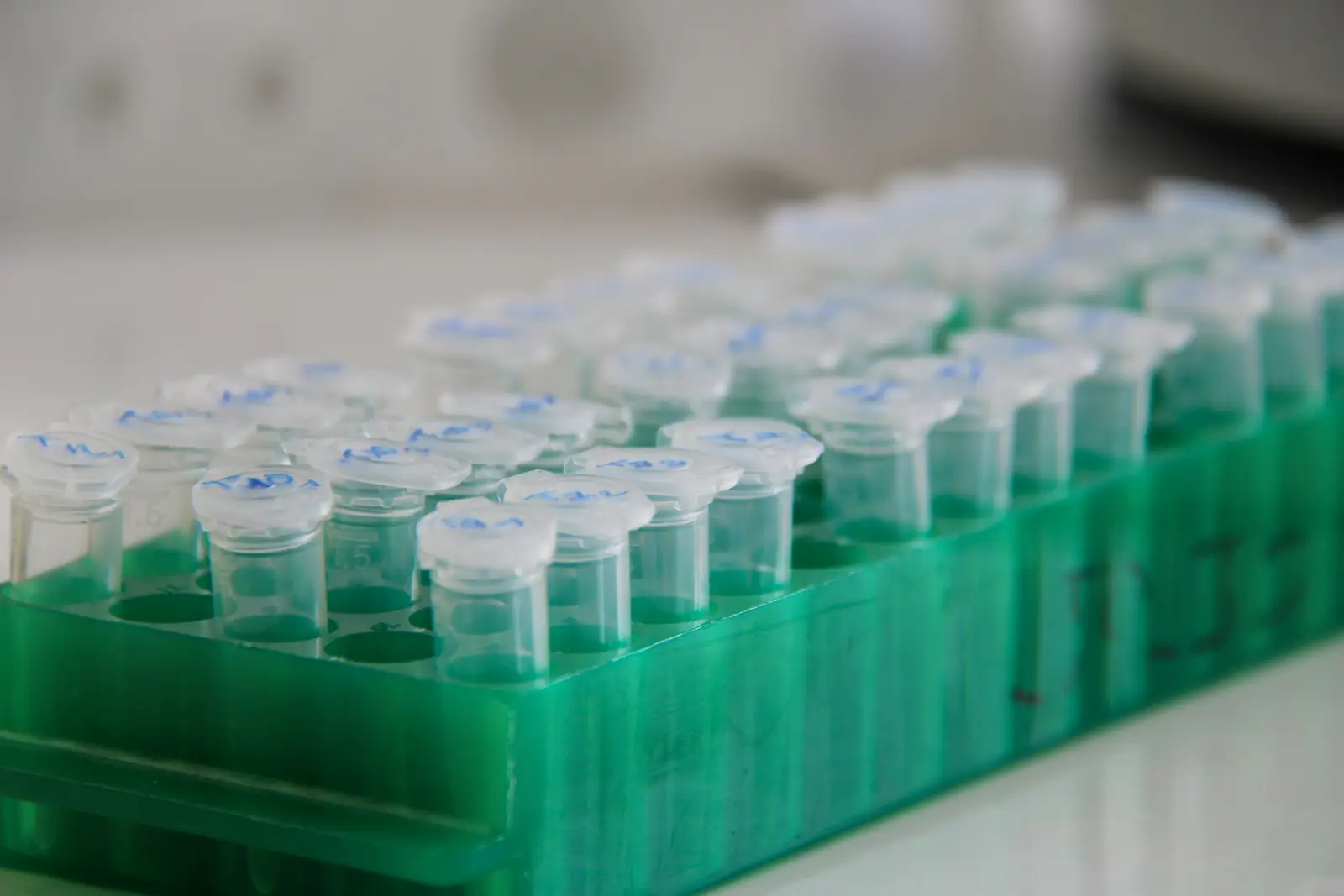
What no test tells you is whether there is an addiction. A result is a fact about one sample. Whether the person can stop, what the drug has been doing for them, and what happens when they try to go without, is something you find out by talking with the person, and that conversation is our daily work. In our house in Lakeside, clients are tested with nine-panel urine strips and a breathalyser on arrival, at random during their stay, after they leave and whenever there is a reason to check, so a result becomes something to work with in treatment.
Got a positive result and not sure what comes next? Talk it through with us on WhatsApp. The first call is free, confidential and takes 20 to 40 minutes, and we reply the same day.
Questions people ask
For most drugs, two to four days after the last use, and about a week in people who use daily. Some go much further: heavy cannabis or nyaope use can show for weeks, and long-term benzodiazepine use for up to 30 days.
Most drugs are detectable in blood for one or two days. That short window is why South African labs such as Lancet prefer urine when drug use is suspected.
Not a standard one. Ampath’s standard 10-panel cassette leaves out CAT, ecstasy and mandrax, so a clean result on it says nothing about those three. A lab will test for them when you ask for them by name.
This article is general information, not medical advice.
Sources
- Ampath Laboratories, Drugs of Abuse leaflet, July 2024
- Lancet Laboratories, South Africa Guide to Drug Testing, June 2015
- SAMHSA, Clinical Drug Testing in Primary Care, Technical Assistance Publication 32, 2012
- Verstraete, Detection times of drugs of abuse in blood, urine, and oral fluid, Therapeutic Drug Monitoring, 2004
- Czerwinska et al., mephedrone metabolites in urine, Drug Testing and Analysis, 2022
A test result is a fact. What it means is a conversation.
A free, confidential first call of 20 to 40 minutes, for yourself or someone you love. We reply the same day, and admission can be immediate and typically happens within three days of first contact.
Free first conversation of 20 to 40 minutes, by WhatsApp, video or phone. We reply the same day.

Leave a request for consultation
Tell us a little about the situation. The first conversation is free and confidential, and we reply the same day.