

What medication helps you stop drinking, and is it available in South Africa?
Which medicines help you stay off alcohol, what each one does, and what is registered or used in South Africa. Tablets work alongside therapy, on prescription.

In short
- Medicines exist, and they work best with therapy. Across 50 trials, naltrexone reduced the risk of heavy drinking to 83% of the risk in the placebo group (Cochrane). None of these medicines replaces the work on why you drink.
- In South Africa the status differs by medicine. Antabuse (disulfiram) is on the register of the South African Health Products Regulatory Authority (SAHPRA), scheduled S3, so it needs a prescription. Naltrexone is licensed for opioid dependence and used off-label for alcohol (2016 guidelines of the South African Addiction Medicine Society, SAAMS). For the rest, we look at availability and fit when we assess you.
- Renewed Life Center in Lakeside, Cape Town, runs medical detox with 24-hour nursing supervision. Medication is given only when clinically indicated and prescribed by a medical professional. Admission can be immediate and usually happens within three days of first contact.
Wondering whether a tablet is the next step for you or someone close? Message us on WhatsApp for a free, confidential call. Twenty to forty minutes, no obligation, and we reply the same day.
Four medicines come up in the guidelines on alcohol: naltrexone, acamprosate, disulfiram (Antabuse) and topiramate. Two turn down the pull to drink, one makes drinking unpleasant, and one has emerging evidence behind it. At our centre in Cape Town medication is considered at the medical assessment and prescribed only where it is clinically indicated, and each sits inside a wider treatment plan.
If you have typed “alcohol tablets” or “pill to stop drinking” into a search bar, you are probably hoping for a switch. What exists is a small set of prescription medicines with a modest, measurable effect. The short version is in our guide on how to stop drinking alcohol safely.
What medication helps you stop drinking?
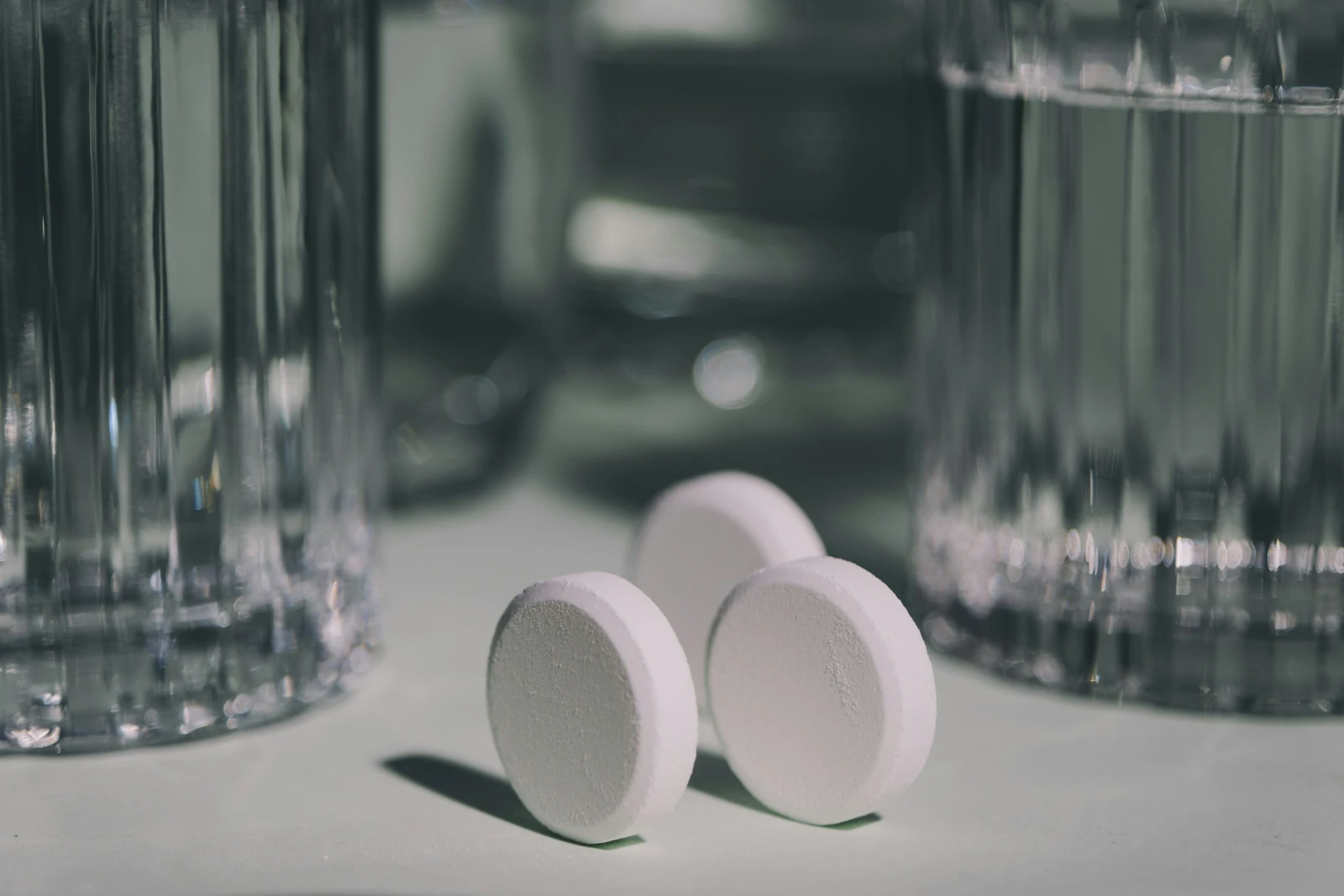
Naltrexone, acamprosate and disulfiram (Antabuse) are the three most often named in guidelines, and topiramate is the newer name. They do different jobs: two reduce craving, one deters, one has emerging evidence behind it. The table sets them side by side. It is general information; doses and timing are set by the doctor treating you.
| Medicine | How it works | Who it suits | What to expect |
|---|---|---|---|
| Naltrexone | Helps reduce the urge to drink (US National Institute on Alcohol Abuse and Alcoholism, NIAAA). It comes as a pill or an injection. | Considered, alongside acamprosate, after a successful withdrawal, for people with moderate and severe alcohol dependence, together with an individual psychological intervention (NICE). | A lower risk of heavy drinking, on average: 83% of the placebo group’s risk of heavy drinking (Cochrane). |
| Acamprosate | Decreasing the negative symptoms sometimes felt during abstinence, making abstinence easier to maintain (NIAAA). | Considered, alongside naltrexone, after a successful withdrawal, for people with moderate and severe alcohol dependence, together with an individual psychological intervention (NICE). | The effect is modest, when used with a psychosocial treatment intervention (South African Addiction Medicine Society, SAAMS). |
| Disulfiram (Antabuse) | Discourages drinking by causing unpleasant symptoms when alcohol is consumed (NIAAA). It does not reduce craving. | Motivated clients who struggle with sobriety (SAAMS), and people aiming to stay abstinent for whom acamprosate and oral naltrexone are not suitable (NICE). | A reaction if you drink, so informed consent is required. Alcohol must be avoided for up to 14 days after the last tablet. |
| Topiramate | Improves abstinence and reduces heavy drinking (American Family Physician guideline summary). | Weighed at the medical assessment. The evidence is emerging (SAAMS). | Local availability is part of the medical assessment. |
Guideline dates: 2011, updated in 2014 (NICE); 2016 (SAAMS).
How do naltrexone and acamprosate work, and how well?
Naltrexone and acamprosate turn down the wanting, not its cause. The effect is moderate. In 50 trials, naltrexone reduced the risk of heavy drinking to 83% of the risk in the placebo group (Cochrane). Across 24 trials with 6,915 people, acamprosate significantly reduced the risk of any drinking, with a relative risk of 0.86 (Cochrane).
A relative risk below 1 means fewer people drank than on placebo, and these are averages across groups. Some people get a great deal from the tablet and some very little, which is why the doctor reviews how it is going. The Cochrane conclusion is that naltrexone appears to be an effective and safe strategy in alcoholism treatment, and that acamprosate is effective and safe for supporting continuous abstinence after detoxification.
Timing matters. These medicines are usually offered once you’ve stopped drinking and need help to stay sober (NHS). Neither is a way to stop. If you drink every day, stopping comes first and it is a medical job: message us, and we tell you whether you need a detox and arrange it, because sudden withdrawal can be dangerous. Our page on the alcohol withdrawal timeline explains what happens in the days that follow.
A common worry is addiction. The medicines approved in the US come out clean on that count: all approved medications are nonaddictive and can be used alone or with other forms of treatment (NIAAA).
What happens if you drink on Antabuse?
Drinking on disulfiram (Antabuse) brings on a reaction, and it can be dangerous. Disulfiram blocks the breakdown of alcohol, acetaldehyde builds up, and the reaction runs to tachycardia, flushing, nausea and vomiting, headaches, seizures and in severe cases death (SAAMS). That is why it requires your informed consent and why it is never given secretly.
Antabuse is the brand on the South African register. On it, alcohol must not be consumed during treatment and for up to 14 days after discontinuation, and treatment should only be carried out under strict medical control (SAHPRA professional information, revised 24 May 2022). The listed use is as an adjunct in the treatment of chronic alcoholism, and the first authorisation dates from 1 December 1974.
Why would anyone take it? Disulfiram is a psychological deterrent for alcohol use in motivated clients who struggle with sobriety (SAAMS). It puts a cost on the next drink and does nothing to the craving. For someone who has already decided, and wants a hard line between themselves and the drink, that line can be the point. The English guideline offers it to people aiming to stay abstinent for whom acamprosate and oral naltrexone are not suitable, or who prefer disulfiram and understand its risks (NICE).
If a reaction looks severe, or there is a seizure, call 10177 for an ambulance, or 112 from a mobile.
What about topiramate and baclofen?
Both get talked about, and the evidence is thinner. For topiramate, emerging evidence is showing promising results (SAAMS). Baclofen turns up often in online searches, and whether it has a place in your plan is a question for the medical assessment.
Topiramate improves abstinence and reduces heavy drinking, and acamprosate and disulfiram have less evidence for improving outcomes, in the American guideline as summarised in American Family Physician. That is a different reading from the British National Institute for Health and Care Excellence (NICE), which is why guidelines from different countries do not always line up.
Whether topiramate and baclofen are available in South Africa, and whether either fits your case, comes up when we assess you. Tablets prescribed to someone else are never a substitute.
Are benzodiazepines a medicine for alcoholism?
No. Benzodiazepines are for getting through withdrawal safely, not for staying stopped, and that work belongs in a detox where someone is watching you. They are first line treatment for the management of the alcohol withdrawal syndrome (SAAMS), and chlordiazepoxide or diazepam are the preferred medication for assisted withdrawal (NICE).
They are shown to reduce the severity of withdrawal, including the risk of seizures, delirium tremens and death.
That makes them a detox medicine, prescribed and watched by a clinician, and nothing to keep in a drawer. Do not use leftover or borrowed tablets to stop drinking on your own. Read about medical detox in Cape Town for how it runs.
Detox at Renewed Life Center runs under 24-hour nursing supervision. It begins with a risk assessment before withdrawal starts, then monitoring, timely clinical support and symptom management, and medication is given only when clinically indicated and prescribed by a medical professional. Sleep and routine are stabilised as part of it.
Not sure whether you can stop safely at home? Talk it through with us on WhatsApp. A relative can make the call, and we reply the same day.
Is it available in South Africa, and do you need a prescription?
Antabuse (disulfiram) is on the register of the South African Health Products Regulatory Authority (SAHPRA) and scheduled S3, which means a prescription is needed. Naltrexone is licensed in South Africa for opioid dependence and used off-label for alcohol (SAAMS, 2016 guidelines).
Nalmefene was not available at the time of those guidelines. For acamprosate, topiramate and baclofen, the current position is checked at the medical assessment.
| Medicine | Status in South Africa |
|---|---|
| Disulfiram (Antabuse) | On the SAHPRA register, scheduling status S3, professional information revised 24 May 2022. SAHPRA record. |
| Naltrexone | Licensed for opioid dependence. SAAMS 2016: used off-label for alcohol. |
| Nalmefene | SAAMS 2016: not available in South Africa at present. That describes 2016, and the current position is checked at assessment. |
| Acamprosate | Checked at assessment. |
| Topiramate | Considered at assessment, with your history. |
| Baclofen | Settled at assessment, together with whether it fits you. |
The SAAMS guidelines date from 2016, so availability may have moved since, and that is one more reason the check happens at assessment, with your full history in front of the medical team. Websites that sell “alcohol pills” without that step are best left alone.
Worldwide, access to medications for treatment of alcohol use disorders remains very low (WHO). You can raise the question on the first call, before anything else is decided.
Do the tablets work without therapy?
No. Every guideline here places the medicine inside a treatment plan. These medicines have to be part of a comprehensive relapse prevention model, which includes an individualised psychosocial treatment plan (SAAMS), and naltrexone and acamprosate go together with an individual psychological intervention (NICE).
The drink was doing a job: closing the day, quietening the nerves, making sleep possible. Nikki Edwards, programme director and clinical manager at Renewed Life Center, puts it plainly: “Addiction is a human condition, it is actually a coping mechanism and it’s a survival technique.” A tablet turns the craving down but does not do that job, so the reason is still there and there is still no plan. Acamprosate eases the negative symptoms felt during abstinence (NIAAA), and those steadier weeks are best spent on what the drinking was covering.
Where anxiety, depression or old trauma sit under the drinking, they are treated on the same plan. See why treating addiction and mental health together matters. Meetings help here too: how to find AA in South Africa gives the helpline and the Cape Town list.
Who prescribes it, and how do we help?
A doctor prescribes it, after an assessment, and at Renewed Life Center that doctor is ours. Every client has a medical assessment by our resident GP, and where mental health sits under the drinking, a psychiatrist selects medication where it is needed. Any medication is given only when it is clinically indicated and prescribed by a medical professional.
The medicine is one part of the plan. Dr Ruby Weber heads psychology at the centre, with over two decades in the addictions field and both international and South African clients. She leads the psychological side of our dual diagnosis work, which is where the reasons behind the drinking get treated. Medical and psychological work run side by side, in one house, on one plan.
Why do people in Cape Town choose Renewed Life Center?
Because for alcohol, the medical side and the therapy sit in the same house at Renewed Life Center in Lakeside, Cape Town. Detox comes first where it is indicated, and therapy begins in the same house, so no one is passed between buildings.
In the first month, individual psychotherapy typically runs three sessions a week and group therapy five or more, Monday to Friday from 09:00 to 16:00. Craig Duke, an addiction counsellor and recovery coach with over twenty years in recovery himself, and Leila Bolland, a social worker and therapist who has worked in the field since 2015, are part of the team. After that, Phase 3 lets clients go out during the day and return in the evening, and the sober living programme adds a weekly meeting with a counsellor.
Paid directly. No scheme’s cap on inpatient days decides when you go home.
A written plan for home. Every discharge includes a relapse-prevention plan built for your own home environment.
Family and distance are planned for. Family therapy runs in person and by video, with family sessions on Wednesday evenings. Airport transfers at Cape Town International are included in both directions. The house is about two kilometres from Muizenberg beach, with a mountain ridge directly behind the grounds. More on alcohol treatment at the centre.
How do you take the first step today?
Write down what you drink in a normal week and what you have tried, then message us. The first call is free and confidential, takes twenty to forty minutes, and gets a reply the same day. Admission can be immediate and usually happens within three days of first contact.
On that call we listen first, then tell you what we would do in your position: whether detox comes before anything else, and which part of the programme fits. You do not have to be certain, and a relative can call for you.
From the first message to the first night
-
A free first call
By WhatsApp, video or phone, twenty to forty minutes, confidential. A relative can make it for you.
-
Clinical assessment
Forty-five to ninety minutes, including the medical assessment, where medication is considered if it is indicated.
-
Admission
Can be immediate, typically within three days of first contact, with detox where it is clinically indicated.
Message us on WhatsApp for a free, confidential call, or write to us if you would rather use a form.
Questions people ask
No. Antabuse (disulfiram) is scheduled S3, so it needs a prescription and, per the South African Health Products Regulatory Authority (SAHPRA) information, strict medical control. For any other medicine, we go through availability and fit with you at assessment. Tablets ordered online without a prescription are not worth the risk.
For the medicines approved in the US, all approved medications are nonaddictive (NIAAA). Naltrexone can be used alone or with other forms of treatment, and the choice is made at assessment.
With disulfiram (Antabuse), no: drinking brings on the reaction, and alcohol must be avoided for up to 14 days after stopping it. Naltrexone and acamprosate are usually offered once you’ve stopped drinking (NHS). At assessment the plan for any medicine prescribed is explained.
No. Disulfiram (Antabuse) requires informed consent from the patient (SAAMS), because the reaction can be serious. If someone you love keeps drinking, start with the conversation: see how to talk to a loved one about rehab, or message us and tell us what you see at home.
This article is general information, not medical advice.
Sources
- South African Addiction Medicine Society, Guidelines for the Pharmacological Management of Alcohol Use Disorder (2016)
- SAHPRA, Antabuse professional information, revised 24 May 2022
- Cochrane, Naltrexone for alcohol dependence
- Cochrane, Acamprosate for alcohol dependence
- NIAAA, Treatment for alcohol problems: finding and getting help
- NICE, Alcohol-use disorders (CG115), recommendations
- NHS, Alcohol misuse: treatment
- American Family Physician, Practice guidelines: substance use disorders (October 2022)
- World Health Organization, Alcohol fact sheet
- Western Cape Government, Emergency numbers
A tablet steadies the craving. The plan is what you build next.
Medical detox with 24-hour nursing supervision where it is indicated, therapy that reaches what the drinking was covering, and admission that can be immediate, typically within three days of first contact.
Free first conversation of 20 to 40 minutes, by WhatsApp, video or phone. We reply the same day.

Leave a request for consultation
Tell us a little about the situation. The first conversation is free and confidential, and we reply the same day.