

How do you get help for a gambling addiction in South Africa?
How do you get help for a gambling addiction in South Africa? NGB 2025 scale of the market, DSM-5 signs, self-help steps, Gamblers Anonymous, the NRGP helpline and how treatment works.

In short
- South Africa’s gambling market is large and still growing fast. The National Gambling Board’s audited data for the year to 31 March 2025 put the industry’s gross gambling revenue at R74.5 billion, with betting revenue up 44.7% on the year before.
- A diagnosis needs a pattern, not one bad night. The DSM-5 defines gambling disorder as repeated betting that continues despite serious problems, and a diagnosis needs at least four criteria present in the past year, according to the American Psychiatric Association.
- It can be treated, drinking and all. Renewed Life Center in Lakeside, Cape Town, treats gambling addiction and other behavioural addictions alongside any drinking, depression or anxiety, in one residential programme with a named team.
Ready to talk about the betting? Book a free, confidential call. A relative can make it for you, and twenty to forty minutes is enough to talk it through.
It started with a few rand on the weekend fixtures, a way to make the match matter more. Now the betting app is open past midnight, the stake keeps climbing to chase back what was lost, and the account you mentioned to your partner is not the one that counts. Betting income in South Africa has grown sharply three years running, and it is now where most of the money in South African gambling goes, far ahead of casino games or the lottery. This page covers gambling addiction as a whole, with sports betting as the main South African case, and where to get help.
How big is gambling in South Africa?
South Africa’s gambling industry produced R74,498,495,925 in gross gambling revenue in the financial year ending 31 March 2025, and betting made up 69.8% of that total, according to the National Gambling Board’s audited statistics for 2024/25. Betting revenue grew 44.7% on the year before, and 59.7% of the country’s entire gambling revenue, not just betting, now comes from online betting rather than a physical counter.
The Western Cape carries more of that than any other province: R23,131,117,704, or 31.0% of national gross gambling revenue, ahead of Gauteng, per the same report. The Western Cape Gambling and Racing Board collected and verified more than R1.75 billion in gambling taxes and levies in the province in the 2024/25 year alone. If you are reading this in Cape Town, the scale of the industry around you is not an impression. It is the biggest gambling economy of any South African province.
What is gambling addiction?
Gambling addiction, formally gambling disorder, is a pattern of repeated betting that continues despite serious problems it causes in a person’s life, not a single reckless night. The American Psychiatric Association defines it this way, and a diagnosis needs at least four specific criteria present in the past year, from a checklist that includes lying about betting, chasing losses and relying on others for money.
Most people with the disorder never get help for it. Only one in ten people with gambling disorder seek treatment, per the same APA page. There are no FDA-approved medications for it specifically, which is a large part of why therapy carries most of the weight in treatment.
Why does online betting make it harder to stop?
Online betting makes it harder to stop because the app removes every natural pause that used to exist between the urge and the bet. A study of online gambling risk factors by Hing and colleagues found that convenient access to internet gambling at any time of day facilitates intense use, at the cost of work and family commitments.
South Africa’s own numbers back that up. Online betting alone now makes up 59.7% of the country’s entire gambling revenue, ahead of every casino and slot machine combined, and betting revenue has been growing at 44.7% a year. The phone that used to sit quietly on the nightstand is now where the betting happens, at 1 a.m. as easily as 1 p.m.
What was the betting actually doing for you?
For most people it was never really about the sport. Betting gives a hit of excitement that switches off boredom or a flat mood. Or it works as an escape from stress, loneliness or a relationship under pressure. The app delivers that relief every time it opens. Not knowing how the next result will land is part of what keeps a person waiting for it.
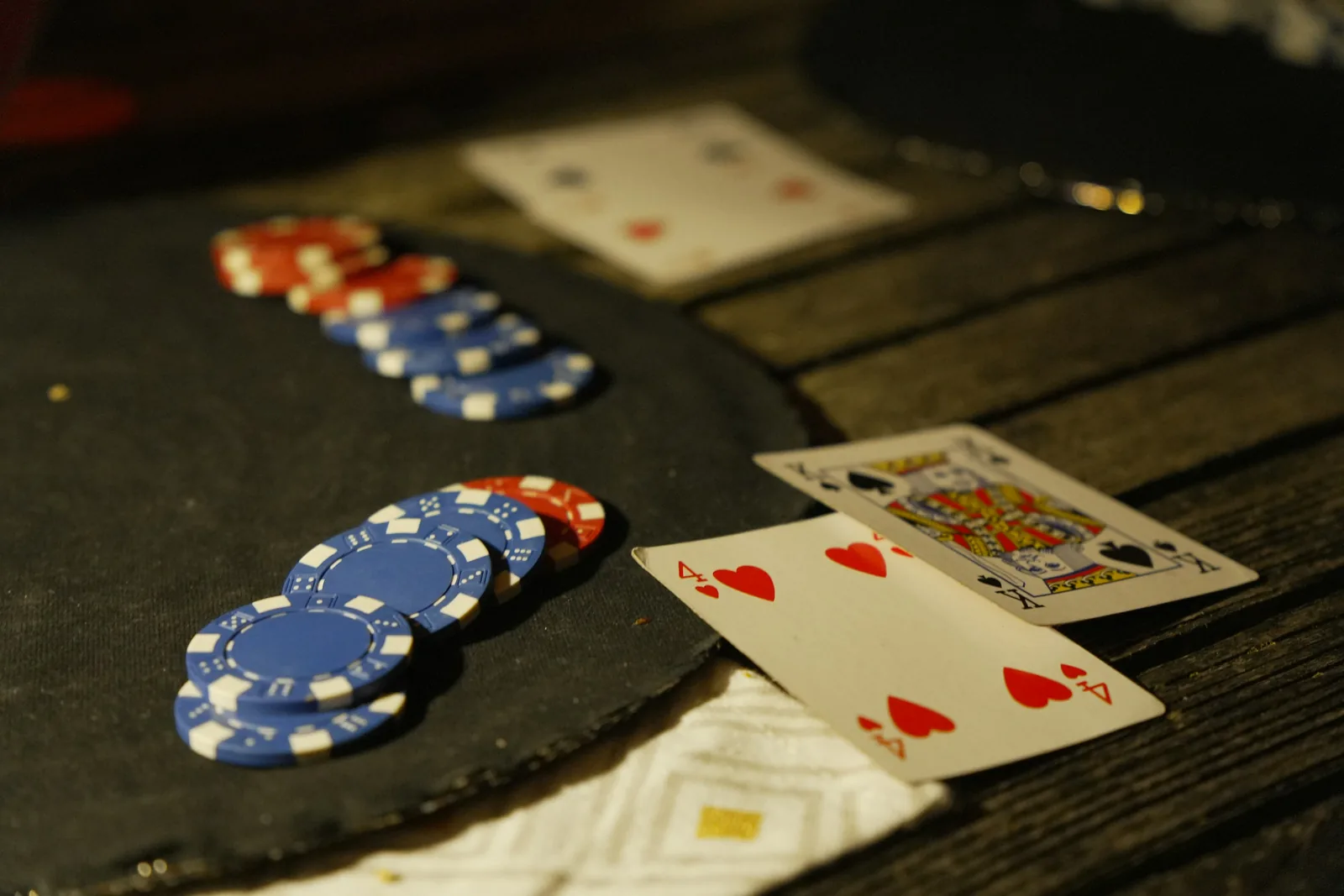
This is not simply a willpower problem, and the numbers back that up. Gambling disorder rarely sits on its own. A 2025 meta-analysis of population surveys by Galeazzi and colleagues found that 82.2% of people with gambling disorder had at least one other mental health condition, most often a substance use disorder or major depression. Betting, drinking and low mood tend to keep each other going. That is also part of why so few people seek treatment.
What are the symptoms of a gambling addiction?
The clearest signs are needing to bet more to get the same feeling, lying about how much you bet, chasing losses, feeling restless when you try to stop, and borrowing money or relying on others to cover gambling debts. The table below shows what the DSM-5 criteria look like inside a betting app, since that is where most South African gamblers now play.
| Criterion | How it looks in practice |
|---|---|
| Preoccupation | Checking odds during work, planning tonight’s bets at lunch |
| Needing bigger bets | A small stake used to feel exciting, now only a big one does |
| Failed attempts to stop | Deleting the app, reinstalling it the same night |
| Chasing losses | Doubling the next bet to win back what was lost |
| Lying | A second account, deleted notifications, a story about the money |
| Relying on others for money | Loans, a card in someone else’s name, family asked to cover a debt |
Two or three of these on a bad month happen to plenty of people who bet casually. Four or more inside a year is where a diagnosis begins, and at that point stopping is rarely just a matter of deciding to.
Can a gambling problem become dangerous?
Yes. Beyond debt, the biggest risk is to mental health. A 2024 meta-analysis in Psychological Bulletin by Kristensen and colleagues found lifetime suicidal thoughts in 31.6% of people with gambling problems and suicide attempts in 13.2%, both significantly higher than in people without gambling problems.
Shame and secrecy tend to make it worse, since the debts pile up quietly and the truth often comes out all at once. If you or someone you know is thinking about ending their life, call the Suicide Crisis Helpline on 0800 567 567, day or night.
When does casual gambling become a problem?
Casual gambling becomes a problem when the amount or frequency stops being the point, and control does. Betting on a match every weekend is not, by itself, a warning sign. What matters is whether you can stop when you meant to, and whether the betting is costing you money you needed for something else, sleep, honesty or the trust of the people around you.
Frequency and stake size are still useful early warnings. Betting that has quietly become daily, or a stake that keeps climbing to get the same buzz, is worth noticing before it turns into the pattern above.
How do you quit gambling on your own?
Start by cutting off access: close every betting account, block gambling sites and apps on your phone, and hand control of your cards to someone you trust for a while. Then tell one person the truth, including the real size of any debt. Betting runs on easy access and on secrecy, so those go first.
First steps this week
Close every account
The main app, and the second one you rarely mention.
Block and filter
Use your phone’s content settings or blocking software, and turn off sports notifications.
Hand over the money
Let someone you trust hold your cards for a while. It takes the decision away from you at 1 a.m., which is when the worst ones get made.
Write down the real number
Every debt, every loan. It is usually bigger than the figure in your head.
Plan the danger hours
Late nights and big match days are when it bites, so fill them with people or plans.
Self-help works for some people, especially early on. It is harder when gambling disorder is not travelling alone: with 82.2% of cases carrying another mental health condition alongside it, blocking apps rarely addresses the anxiety, low mood or drinking sitting underneath.
How do you block gambling sites and self-exclude in South Africa?
Blocking software on your phone or router stops the apps loading in a moment of weakness, and most South African banks let you set gambling limits or blocks on specific cards. Several casinos and betting operators also run self-exclusion registers, where you formally ask to be barred from their sites and venues for a set period.
Gamblers Anonymous South Africa describes itself as a fellowship that shares experience and support to solve a common problem, open to anyone who wants to stop gambling regardless of religious belief. It runs a hotline for the Western Cape and a weekly meeting in Cape Town, in Kenilworth on Thursdays. The National Responsible Gambling Programme’s counselling line, 0800 006 008, is free, confidential and answered 24 hours a day, seven days a week, anywhere in the country.
What are the warning signs for family and friends?
The clearest warning signs are financial: unexplained withdrawals, unpaid bills despite a normal income, borrowed money that is never quite explained, and a sudden defensiveness about phones or bank statements. Mood often shifts alongside it, with irritability when betting is mentioned and a pattern of disappearing for long stretches, especially during big sporting fixtures.
None of these on its own proves anything. Together, and getting worse, they are usually reason enough to raise it directly.
How do you help someone with a gambling addiction?
Start with the money, not the argument: separate accounts, your own access to statements, and a firm stop to covering gambling debts, which can feel loving but usually pays for the next round of betting. Then pick a calm moment for the conversation, bring facts rather than accusations, and have a next step ready so the talk ends somewhere useful, not in another row.
South African data shows what families are usually dealing with when they finally call for help. Among callers to a South African counselling line, 41% said they could not stop gambling without professional help, 32% called about money, and 13% about legal problems. Research elsewhere estimates that a typical problem gambler affects six other people around them. Our guide on family therapy and support explains how families are brought into treatment here.
What does treatment for a gambling addiction involve?
Treatment usually combines therapy aimed at the betting itself with treatment for whatever travels alongside it. A Cochrane review found that cognitive behavioural therapy reduces gambling behaviour and other symptoms of problem gambling immediately after treatment, though the same review notes that how long the gain lasts is less well established. Because gambling disorder so often sits alongside anxiety, depression or substance use, treating the betting on its own tends to leave the rest of the picture untouched.
At Renewed Life Center, Dr Ruby Weber heads psychology. She has spent more than two decades in the addictions field with international and South African clients, treating both chemical and process addictions, with a particular interest in how trauma can intensify each. Gambling addiction and behavioural addictions are among the conditions we treat, alongside any drinking, depression or anxiety in the same plan, with dual diagnosis care built in rather than added on.
Betting and drinking, or betting and low mood? Talk to us for free. A clinical assessment follows within three days, and both are treated in one plan.
How do you pay for treatment in South Africa?
Renewed Life Center is paid for directly, without billing through South African medical schemes. That means your clinical picture, not a scheme’s benefit limit, decides how long treatment runs, and your details stay between you and the clinical team. If cost is what is holding you back from a first conversation, write to us and we will explain the fee and what it covers.
If a residential programme is not yet what you need, the National Responsible Gambling Programme offers free counselling regardless of income, funded by a 0.1% levy on the gambling industry’s own revenue, on 0800 006 008, day or night.
Why do people choose Renewed Life Center for gambling addiction?
Mainly because this gambling rehab treats the betting together with whatever travels with it, in one programme, by named people, rather than a gambling counsellor in one place and an addiction service in another.
We treat gambling as an addiction in its own right. Gambling addiction and behavioural addictions are among the conditions we treat, with dual diagnosis care for depression, anxiety, PTSD and burnout in the same plan.
Dr Ruby Weber heads psychology, with more than two decades of experience that includes process addictions. Leila Bolland is a social worker and therapist who has worked in the field since 2015, and John Roberts, our Senior Recovery Specialist, has 39 years of personal recovery.
The programme runs individual psychotherapy typically three times a week in the first phase, group therapy five or more times a week, and you leave with a written relapse-prevention plan built for your own home, covering the hours when betting used to happen. The house is in Lakeside, with the mountain ridge directly behind it, about two kilometres from Muizenberg beach, and airport transfers at Cape Town International are included both ways.
How do you start?
Start with a free, confidential conversation of twenty to forty minutes by WhatsApp, video or phone, even if nobody else knows yet. A clinician then spends 45 to 90 minutes on the betting in a pre-admission assessment, within three days. Admission can be immediate, and typically happens within three days of first contact.
How you get here
A free first call
Twenty to forty minutes, no obligation. A partner or parent can make it for you.
Clinical assessment
Forty-five to ninety minutes, within three days, covering the betting, any drinking or drug use, mood and debts.
Admission
Can be immediate, typically within three days of first contact. Airport transfers at Cape Town International are included both ways.
Call or write, whichever you can face today: book a free call or send a message. We reply the same day.
Questions people ask
Yes. The National Responsible Gambling Programme runs a free, confidential counselling line on 0800 006 008, available 24 hours a day, seven days a week.
Renewed Life Center is paid for directly rather than billed through a medical scheme, so your clinical picture decides length of stay. The National Responsible Gambling Programme’s counselling line is free regardless of medical aid.
Yes. Gambling disorder is a recognised diagnosis in the DSM-5, and sports betting is one of the forms it takes, especially through betting apps.
Yes. A partner or parent can make the first call. It is free and confidential, and together we work out what to do next.
This article is general information, not medical advice.
Sources
- National Gambling Board, National Gambling Statistics, Financial Year Ending 31 March 2025
- Western Cape Gambling and Racing Board, published documents
- American Psychiatric Association, What is gambling disorder?
- Hing, Russell and Browne, Risk factors for gambling problems on online electronic gaming machines, race betting and sports betting, Frontiers in Psychology, 2017
- Galeazzi, Marchi and Castagnini, Psychiatric morbidity and gambling disorder: a systematic review and meta-analysis of population-based surveys, 2025
- Kristensen et al., Suicidality among individuals with gambling problems: a meta-analytic literature review, Psychological Bulletin, 2024, PMID 38095933
- Cowlishaw et al., Psychological therapies for pathological and problem gambling, Cochrane Database of Systematic Reviews, 2012, PMID 23152266
- Sinclair, Pretorius and Stein, A counselling line for problem and pathological gambling in South Africa: preliminary data analysis, 2014
- Tulloch, Hing, Browne, Rockloff and Hilbrecht, The effect of gambling problems on the subjective wellbeing of gamblers’ family and friends, 2021
- Gamblers Anonymous South Africa
- South African Responsible Gambling Foundation, National Responsible Gambling Programme
- South African Depression and Anxiety Group, helplines
Betting can stop running your life.
A free, confidential conversation of twenty to forty minutes, and a partner or parent can make the call. We reply the same day, and admission can be immediate, typically within three days of first contact.
Free first conversation of 20 to 40 minutes, by WhatsApp, video or phone. We reply the same day.

Leave a request for consultation
Tell us a little about the situation. The first conversation is free and confidential, and we reply the same day.