

What is art therapy, and how does it help in addiction recovery?
What art therapy is, where it is regulated and taught in South Africa, what the research honestly shows for depression, PTSD and addiction, and how it fits into treatment at Renewed Life Center.
In short
- Art therapy is an established form of psychotherapy that uses image-making, not words, to help people process what talking alone does not reach. The British Association of Art Therapists states plainly that no artistic skill is needed to benefit from it.
- The evidence is genuinely mixed, and worth stating honestly. A 2026 meta-analysis found a real effect on depression (19 studies, 997 patients), the trial evidence for PTSD is rated low to very low quality, and no dedicated systematic review yet exists for art therapy and addiction specifically.
- At Renewed Life Center, Art Therapy runs inside the weekday group programme , alongside Schema Therapy, DBT and trauma work, not as a stand-alone treatment. Admission can be immediate and typically happens within three days of first contact.
Wondering whether creative, body-based work could help you or someone you love? Book a free, confidential call. We reply the same day.
Someone mentions “art therapy” during a call about treatment, and the first question is usually whether that means anything more than colouring pencils and a quiet hour. The honest answer is that it can be a proper clinical tool, run by someone trained to use it, or it can be a loosely borrowed label with nothing behind it. The difference matters more than it sounds.
This page sets out what art therapy actually is, where it is regulated in South Africa, what the research does and does not show for addiction specifically, and how it fits into a wider treatment programme rather than standing in for one.
What is art therapy?
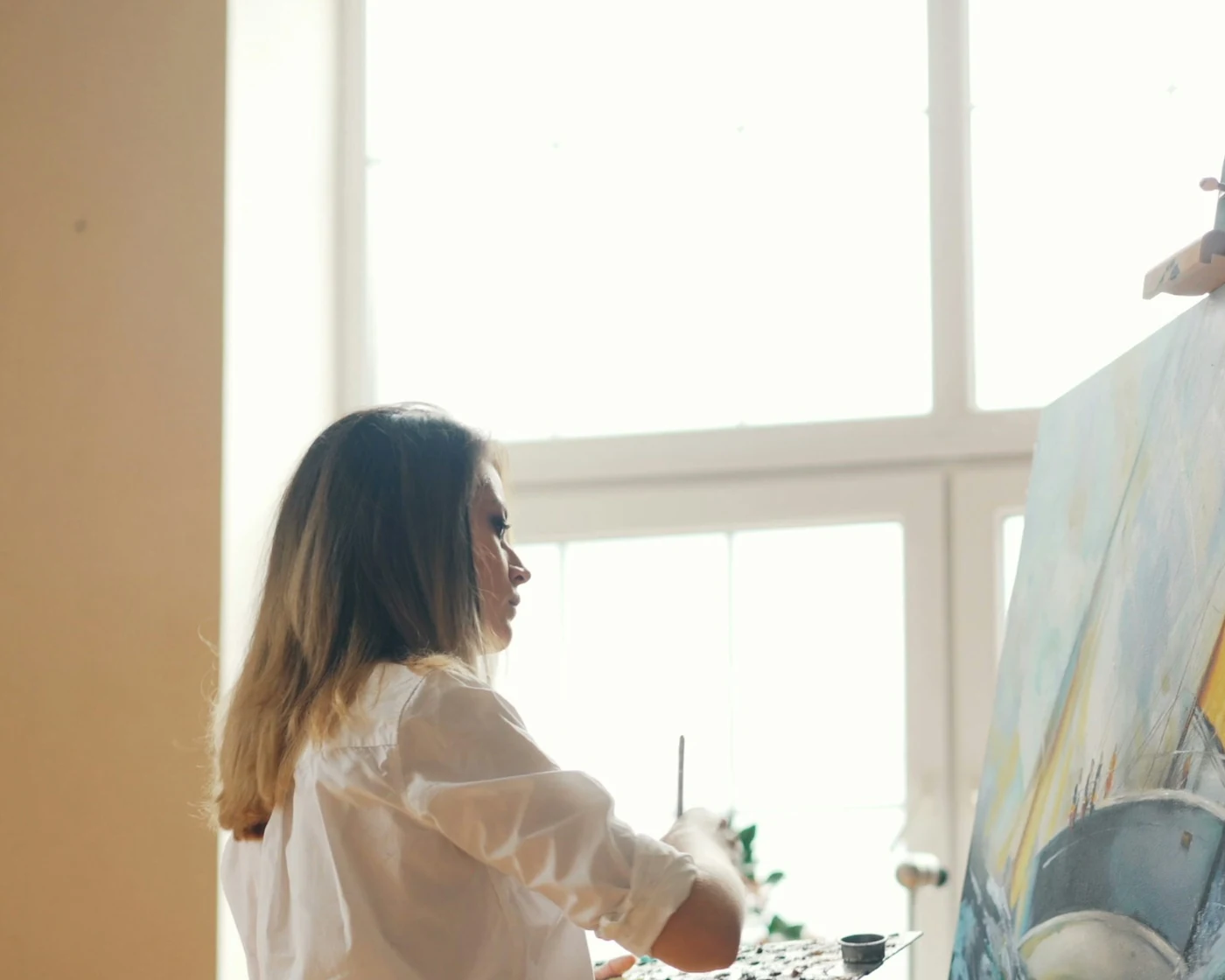
Art therapy is an established form of psychotherapy, delivered by a trained therapist who uses image-making alongside talking to help someone process what conversation on its own does not always reach, according to the British Association of Art Therapists. It sits inside psychotherapy, not beside it as a craft activity.
The American Art Therapy Association describes it the same way: a mental health profession delivered by clinicians with master’s-level or higher degrees trained in art and therapy, not a hobby led by an enthusiastic amateur. In South Africa, art therapy is one of four recognised arts therapies, alongside music, drama and dance movement therapy, each using a different medium to reach the same aim.
You do not need to be able to draw. “You do not need to be skilled in art to benefit from art therapy,” the British Association of Art Therapists states, and that line does more to explain the method than most descriptions of technique.
What is the goal of a session, and who runs it?
The goal is to reduce distress and build insight and self-worth through the process of making something, not to produce good art. Art therapy “aims to reduce distress and improve social, emotional and mental health by promoting insight, self-compassion and a sense of agency and self-worth,” the British Association of Art Therapists states.
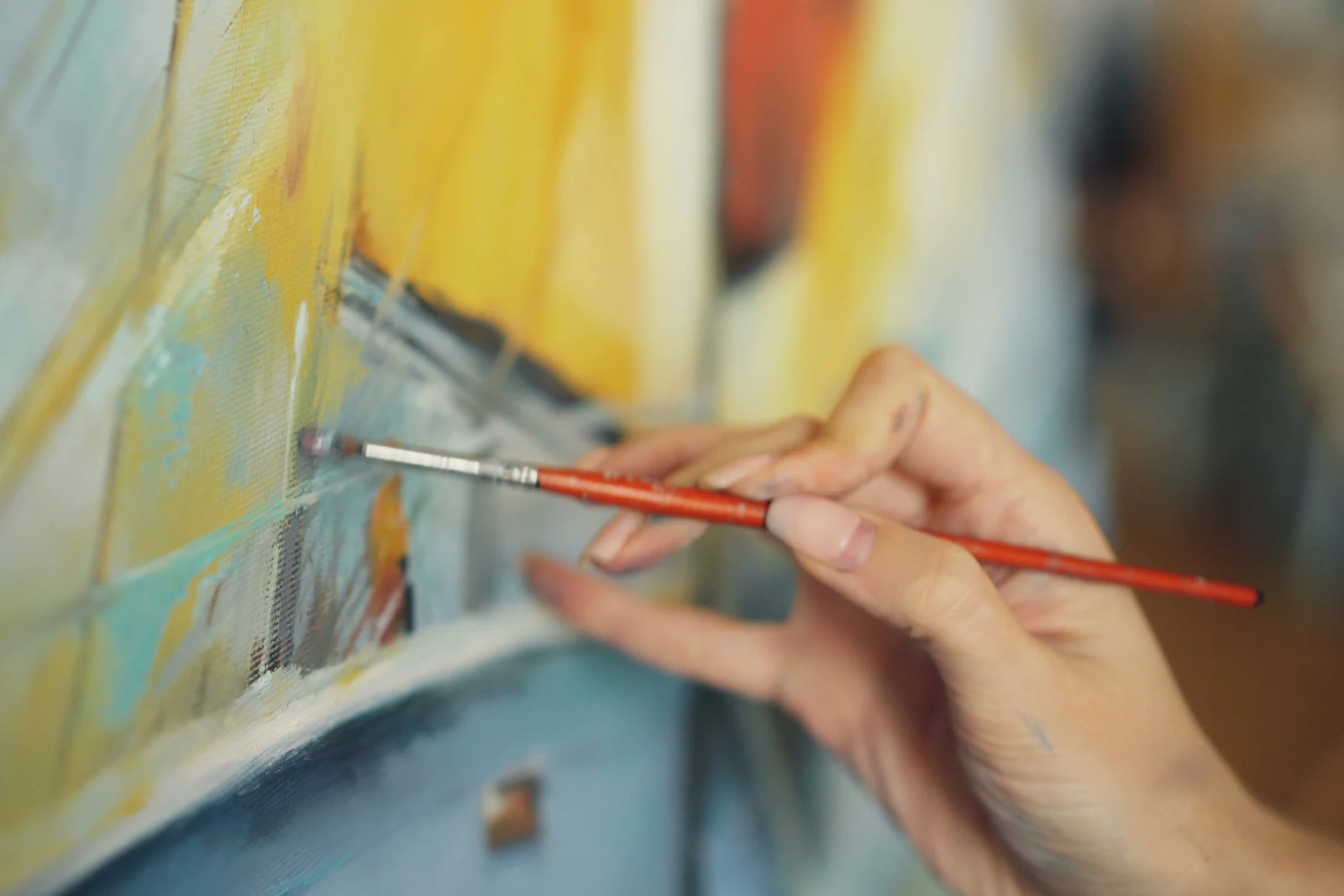
A trained therapist sets the materials and the frame, then works with what comes up, in the image and in the conversation around it, rather than teaching technique. Sessions are usually run in a small group, with individual attention inside that group setting rather than one to one throughout.
Where is art therapy regulated, and where do you train in South Africa?
Art therapy is a regulated health profession in South Africa, not an unregulated wellness practice. Practising under the title without registration is a criminal offence, not just bad form: “All Arts Therapists are required to be registered by the HPCSA in order to legally practice. Failure to do so will result in prosecution in terms of Section 34 of the Health Professions Act, 1974,” the South African National Arts Therapies Association states.
The path to practising as an art therapist in South Africa
- A master’s degree in art, drama, dance or music therapy from a registered university, with at least 1,000 hours of clinically supervised practice built into the course, the professional association states.
- Registration with the Health Professions Council of South Africa (HPCSA) before using the title, required under Section 34 of the Health Professions Act.
- In South Africa, that master’s is taught at the University of Johannesburg, over two years full-time, governed jointly by the HPCSA and SANATA. There is no equivalent master’s programme in Cape Town.
That last point is worth sitting with if you are searching for “art therapy Cape Town”: the city has independent practitioners and short introductory workshops, but the professional qualification itself sits in Johannesburg. It is one reason art therapy inside a treatment centre works best as part of a wider clinical team, rather than a single practitioner’s private practice.
Who does art therapy actually help?
People dealing with depression, anxiety, trauma and PTSD, and people in addiction treatment where talking alone has not been enough, tend to benefit most. Art therapy “can help people of all ages and at all stages of life, including those whose life has been affected by difficult personal or cultural experiences,” the British Association of Art Therapists notes, which is a wide net rather than a narrow diagnosis.
In an addiction treatment setting specifically, it tends to help most alongside depression or anxiety and alongside trauma or PTSD, where a lot of what needs processing sits below the level most people can put into words on demand, in a session, on schedule.
Why did making something help, when explaining it out loud never did?
Because talking asks the analytical brain to narrate a feeling, and some feelings were never stored that way to begin with. A drawing, a shape pressed into clay, does not require the same translation. For a lot of people, the substance was doing a similar job in reverse: quietening a feeling that had no words attached to it yet, rather than one they had simply chosen not to discuss.
That is not a failure of willpower or honesty. Early, overwhelming experience is often stored as sensation and image before it is stored as a story with a beginning and an end, which is part of why asking someone to just talk about it can hit a wall that has nothing to do with how much they want to get better.
Does the research support art therapy, honestly?
For depression, yes, reasonably well. PTSD evidence is real but weak. Addiction specifically has no dedicated systematic review yet, and that gap is worth naming rather than glossing over.
A 2026 systematic review and meta-analysis in Frontiers in Psychiatry pooled 19 studies covering 997 patients and found a standardised mean difference of 0.53 for depressive symptoms, favouring the intervention group, Joschko and colleagues report. That is a genuine, statistically significant effect, not a marginal one.
PTSD is a different picture. A 2017 systematic review of seven studies rated the trial evidence for art therapy as low to very low, noting that the trials themselves were, in the reviewers’ own words, very poor. A 2025 meta-analysis of the same field found a significant reduction in PTSD symptoms, but across just seven controlled trials with extremely high variability between them: SMD -1.98, with an I² of 98%. A big number built on a small, inconsistent base is not the same thing as a settled finding.
Addiction is where the honesty matters most, because it is the reason most people reading this page are here. No systematic review or Cochrane review looks specifically at art therapy for substance use disorder. The closest comparable evidence comes from a related modality: a Cochrane review of music therapy for substance use disorder, covering 21 studies and 1,984 people, found it likely reduces craving and increases motivation for treatment, though the reviewers themselves rate their confidence in the finding as low to moderate.
For art therapy itself and addiction, the published evidence is currently limited to small clinical reports: a 2026 case study describing two closed art therapy groups of eight and twelve sessions, each with eight adult participants, and a 2025 paper proposing a possible mechanism, that art-making activates neural reward networks also affected by trauma, while stating plainly that additional empirical research is needed. That is a plausible, promising direction. It is not yet a proven treatment for addiction on its own, and nobody should be told otherwise.
How does art therapy fit into treatment at Renewed Life Center?
It runs inside the weekday group programme, alongside other named groups, not as a stand-alone treatment for addiction on its own. Art Therapy sits in the same Monday to Friday, 09:00 to 16:00 group schedule as Schema Therapy, DBT, Process Group work, Psychoeducation, Addiction Theory and Relapse Prevention, alongside individual psychotherapy each week.
That placement is deliberate rather than decorative. The honest evidence above points to art therapy working best as one channel among several, not a therapy that carries a treatment plan by itself, and that is exactly how it is used here: one tool inside a coordinated programme, not a programme of its own.
Dr Ruby Weber leads the psychological side of treatment, with more than two decades in the addictions field working with South African and international clients, and a particular interest in how trauma intersects with chemical and process addictions. Art Therapy runs as one of the weekday group sessions inside that same programme, alongside individual therapy, not in place of it. See also our wider holistic therapies programme, which includes equine therapy alongside Art Therapy.
If a formal diagnosis is not the point, and you just want to know whether this could help, book a free, confidential call. Twenty to forty minutes, no obligation.
Why do people choose Renewed Life Center for art therapy and holistic work?
Because it never runs alone. Art Therapy sits inside a weekday group programme built and supervised by the same clinical team that runs individual therapy, medical detox and dual diagnosis care, so nobody explains their history twice to two different providers.
Named clinicians, not a rotating roster. Dr Ruby Weber leads the psychological side of the programme. A resident GP and nurses cover the medical side around the clock, and a psychiatrist selects medication only where it is genuinely needed.
One programme, not a chain of handovers. Medical detox where indicated, primary treatment and the later phases all run inside the same house, with the same clinical team, rather than a referral out partway through.
Payment is direct, so a clinical decision, not a scheme’s day limit, decides how long someone stays. The house is in Lakeside, in Cape Town’s Southern Suburbs, with a mountain ridge directly behind the grounds and staff on site 24 hours a day. Airport transfers are included both ways for anyone flying in.
How do you start?
With a free conversation of twenty to forty minutes, by WhatsApp, video or phone. A clinical assessment of 45 to 90 minutes follows within three days, and admission can be immediate.
From first call to admission
-
A free first call
No obligation, no judgement. A partner or parent can make it instead of you.
-
Clinical assessment
What has helped before, and whether talking on its own has been enough.
-
Admission
Can be immediate. Art Therapy joins the plan from the first week, alongside dual diagnosis treatment where it is needed.
Write to us with any question first, or book a free, confidential call straight away.
Questions people ask
No. The British Association of Art Therapists states directly that no artistic skill is required. The value sits in the process of making something and what comes up while doing it, not in the result.
No. Art therapy is delivered by a clinician with a master’s-level qualification, working within a psychotherapeutic relationship. An art class teaches technique. Art therapy uses the same materials for a different purpose.
No, and no dedicated systematic review claims it can. At Renewed Life Center it runs inside the weekday group programme alongside individual therapy, medical care and other named groups, not as a stand-alone treatment.
At the University of Johannesburg, the only master’s programme in the country, governed jointly by the HPCSA and SANATA. There is no equivalent qualification taught in Cape Town.
For depression, a 2026 meta-analysis of 19 studies found a genuine effect. PTSD trial evidence is rated low to very low quality. Addiction specifically has no dedicated systematic review yet, though a related modality, music therapy, has Cochrane evidence behind it.
Yes. At Renewed Life Center in Lakeside, Art Therapy runs as one of the weekday group sessions inside the residential programme, alongside individual therapy, not in place of it. A free first call is the quickest way to hear how it would fit your own plan.
This article is general information, not medical advice.
Sources
- British Association of Art Therapists: what is art therapy?
- American Art Therapy Association: about art therapy
- South African National Arts Therapies Association: art therapies
- South African National Arts Therapies Association: careers and training
- University of Johannesburg: MA in Art Therapy (Coursework)
- Joschko et al., systematic review and meta-analysis of art therapy for depression, Frontiers in Psychiatry, 2026
- Baker et al., systematic review of creative arts therapies for adults with PTSD, 2017
- Wang et al., meta-analysis of creative arts therapy for PTSD, 2025
- Cochrane: music therapy for people with substance use disorder
- Arnold and Kapitany-Fövény, case studies of art therapy groups for substance use disorder, 2026
- Quinn, proposed neurobiological mechanism of art therapy for substance use disorder, Frontiers in Psychiatry, 2025
Curious whether art therapy could help? Ask us how it fits your programme.
A free, confidential call of twenty to forty minutes, for yourself or someone you love. We reply the same day, and admission can be immediate, typically within three days of first contact.
Free first conversation of 20 to 40 minutes, by WhatsApp, video or phone. We reply the same day.
Leave a request for consultation
Tell us a little about the situation. The first conversation is free and confidential, and we reply the same day.