

Is MDMA addictive, and what does it do to you?
Is MDMA addictive, and what does it actually do to your body? Dependence rates, the suicide Tuesday comedown, overheating and hyponatraemia, mixing with antidepressants, and when it needs professional help.

In short
- MDMA can become addictive with regular use, though not in the same way as cocaine or opioids. In one study of 214 regular Australian ecstasy users, 31% met DSM-IV criteria for dependence in the past year, rising towards 45% once milder comedowns were counted, according to McKetin et al., 2014. That is a sample of regular users, not everyone who has tried it once.
- Overheating and low blood sodium, not addiction, cause most MDMA deaths. Drink around half a pint of water an hour if you are dancing in the heat, not more, because too much water carries its own risk, according to NHS Scotland. Call an ambulance for overheating, fitting or confusion.
- Renewed Life Center treats the anxiety, depression or burnout that MDMA use is often covering, alongside the substance itself. Assessment happens within three days of first contact, and the first conversation is free.
Worried about your own use, or someone else’s? Book a free, confidential call. Twenty to forty minutes, no obligation, and we reply the same day.
Most people who search this question have just had a heavy weekend and cannot shake the low mood that followed it. Some are a partner who found a baggie in a jacket pocket. Others are a parent who noticed the Tuesday crash happening every second week instead of every few months. This page is for all three: what MDMA does, where the real dangers sit, and when a rough patch has become something more.
If MDMA is already part of the night: what lowers the danger
- do not combine it with antidepressants, especially an MAOI, without medical advice
- pace water at around half a pint (284ml) an hour if you are dancing in a hot room, and no more
- take regular breaks from dancing and from heat
- do not redose through the night to chase the first peak
Tolerance to MDMA builds quickly, and people who respond by taking more are the ones who end up with complications, according to StatPearls.
Emergency: call an ambulance now if someone is
- overheating
- having a fit
- disorientated, agitated or badly confused
- becoming rigid
These are the signs NHS Scotland lists as reasons to get emergency medical help. In Cape Town, call 112 from any mobile, or 021 480 7700. The national ambulance number is 10177. If the crisis is about wanting to end a life rather than a body in trouble, the Suicide Crisis Helpline is 0800 567 567, day or night.
What is MDMA, and is molly the same as ecstasy?
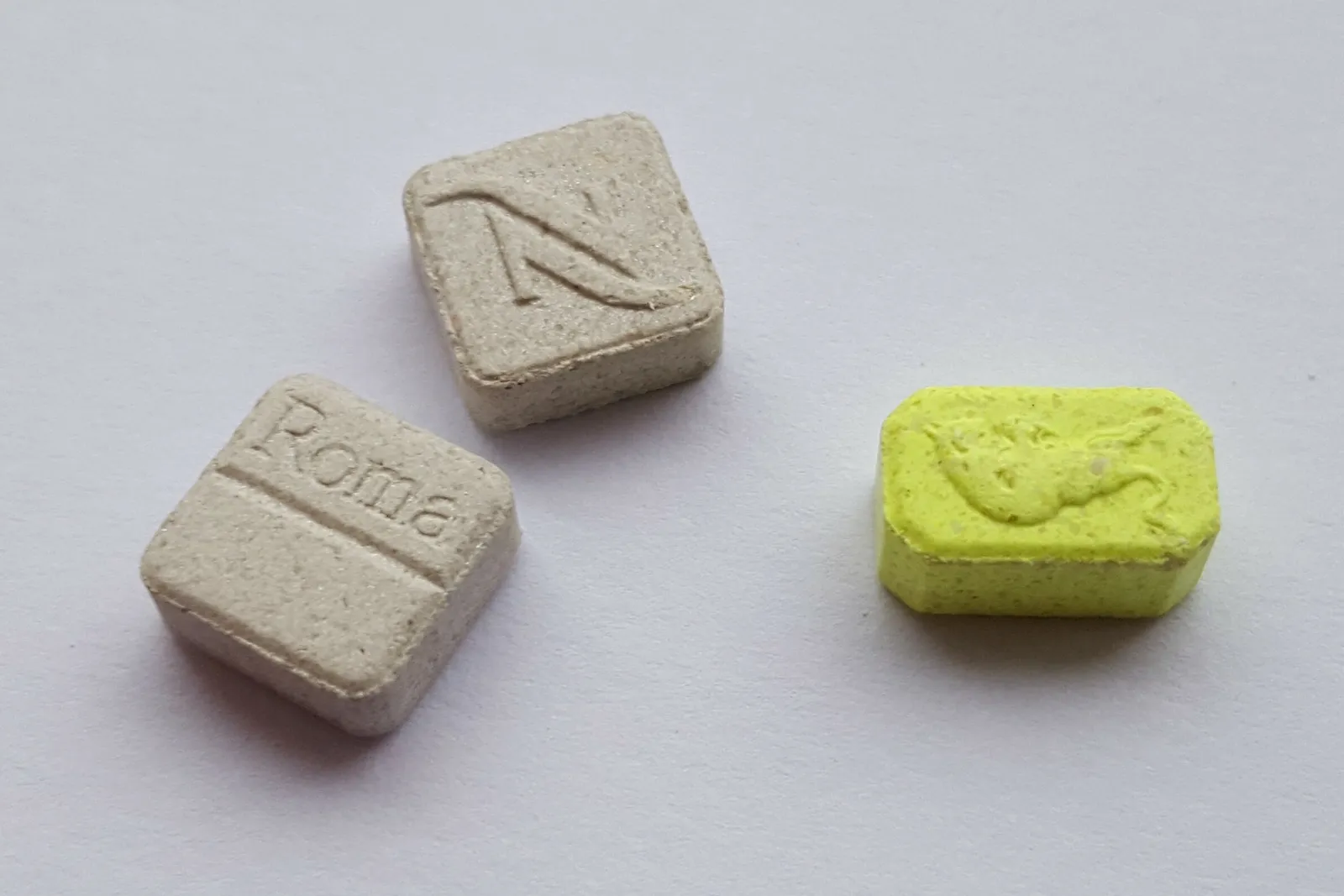
MDMA is the chemical, 3,4-methylenedioxymethamphetamine, and it is the active ingredient people mean when they say ecstasy or molly. Ecstasy usually refers to the pressed tablet form, sold with a stamped logo; molly is sold as a powder or crystal and marketed as purer. Neither name guarantees what is in the bag: a pill or capsule can contain anything from no MDMA to a dangerously high dose, with no reliable way to tell by looking or tasting. Pharmacologically it sits in a category of its own, part stimulant and part something closer to a mild psychedelic, flooding the brain with serotonin, dopamine and noradrenaline, which is where both the euphoria and the after-effects come from.
What does MDMA do to your body and brain?
MDMA raises body temperature, speeds up the heart and floods the brain with serotonin, producing the empathy and energy people take it for, and the physical strain that makes the setting dangerous. Short-term physical effects, NHS Scotland lists, include dilated pupils, jaw clenching, raised body temperature and a faster heart rate.
What is actually happening
- Serotonin surge. The rush of connection and warmth comes from serotonin release, the same chemical that regulates mood day to day.
- Raised heart rate and temperature. The body works harder, which is why heat and exertion turn an ordinary night into a medical risk.
- Serotonin depletion afterwards. The brain has spent what it released, and that debt is what the next few days feel like.
With repeated use, that depletion does not fully reset between sessions, and over time this can raise the risk of anxiety and depression, NHS Scotland notes.
Is MDMA addictive?
Yes, MDMA can be addictive, mostly for people who use it regularly: in a study of 214 regular ecstasy users, 31% met the criteria for dependence in the past year. The pull is weaker than cocaine or heroin, and a bad comedown on its own is not a sign of addiction. Animals will self-administer MDMA, one marker researchers use for addictive potential, but take it far less than cocaine when both are available, according to the US National Institute on Drug Abuse. In people, NIDA describes the same warning signs as any other substance use disorder: continued use despite the downsides, tolerance, withdrawal effects and craving.
The clearest human data comes from Australia, where researchers interviewed 214 people who already used ecstasy regularly and asked about the past year. Using DSM-IV criteria, 31% met the threshold for dependence, rising towards 45% once ordinary comedowns were folded into the count, McKetin and colleagues found in 2014.
The same study makes an important methodological point: counting an ordinary comedown as withdrawal inflates the picture badly. Strict DSM-IV withdrawal criteria were met by only 1% of the sample, rising to 11% with intense comedowns and 75% if any regular comedown counted as withdrawal at all. A grim Tuesday is not a diagnosis, and most people who feel awful for two days are not dependent.
| Ordinary comedown | Signs of dependence | Medical emergency |
|---|---|---|
| Low mood, fatigue and poor sleep in the days after use | Using more often than planned, or needing more to feel anything | Overheating, fitting or unresponsive |
| Improves on its own with rest, food and time | Thinking about the next session between weekends | Rigid muscles, severe agitation or confusion |
| No craving to redose once the effect has worn off | Using despite it costing money, sleep, work or a relationship | Suspected serotonin syndrome after mixing with antidepressants |
What is “suicide Tuesday”, and how long does a comedown last?
The low after MDMA can last most of a week. In a classic study, users rated their mood as elevated on day one but significantly low by day five, the midweek dip regular users call “suicide Tuesday”, and some scored within the range for clinical depression, Curran and Travill reported in 1997. The same researchers point to temporary serotonin depletion, possible serotonergic changes and simple psychological letdown as the likely mechanisms behind weekend use turning into a bad midweek.
The name is dramatic, and for most people the week just feels flat rather than dangerous. But when low mood on day five sits closer to clinical depression than tiredness, and especially if it comes with thoughts of ending your life, that is not something to wait out alone. The Suicide Crisis Helpline, 0800 567 567, runs day and night.
Can you overdose on MDMA?
Yes, you can overdose on MDMA, but the deaths that do happen usually come from overheating or low blood sodium rather than the dose alone. Both are driven by the setting more than by the drug itself. StatPearls names hyperthermia and hyponatraemia as the two most frequently reported causes of MDMA-related death, while also noting that deaths overall are rare. The mechanism is real: rats kept in a warm room developed fatal hyperthermia above 41°C within six hours of an MDMA dose, and all of them died within that window, researchers reported. That is an animal study, not humans, but it shows why heat and MDMA make such a dangerous mix.
The counter-instinct that catches people out is water. NHS Scotland recommends around half a pint, 284ml, an hour while dancing in the heat, and warns against drinking too much, because MDMA can trigger a hormone that stops the body making urine, and too much water on top of that unbalances the body’s salt levels.
| Overheating | Too much water (hyponatraemia) |
|---|---|
| Overheating | Nausea and vomiting |
| Fitting, becoming rigid | Headache, irritability |
| Disorientation, agitation, confusion | Loss of consciousness |
Sources: NHS inform (Scotland), MDMA emergency signs; UK government guidance on fluid intake, symptoms of over-hydration.
Women carry more of the water-balance risk. At one rave in Amsterdam, 14.3% of MDMA users tested had developed hyponatraemia during the night, split sharply by sex: 26.7% of women against 3% of men, a field study found. A case report described a woman admitted with sodium at 117mmol/L against a normal range of 136 to 146, and points to oestrogen’s effect on sodium balance as one reason women are disproportionately affected, according to the case review.
Is it dangerous to mix MDMA with antidepressants?
Yes, and how dangerous depends on the antidepressant. MAOIs taken with MDMA account for the most serious cases in the research, while SSRIs (selective serotonin reuptake inhibitors) mostly blunt the high, which tempts people to take more MDMA. A systematic review found SSRIs, SNRIs and tricyclics are unlikely to push serotonin to life-threatening toxicity when combined with MDMA, largely because they blunt its effect: SSRIs reduced the subjective high by roughly 30 to 80%, the same review reported. NHS Scotland’s practical warning is about what happens next: an SSRI dulls the euphoria, so it can be tempting to take more MDMA to feel the effect, which puts more strain on the body than it does anything else.
MAOIs block the enzyme that breaks down monoamines, and combined with MDMA this produces a dangerous spike in synaptic serotonin: the highest rates of serious illness in the case reviews came from MDMA taken alongside an MAOI such as moclobemide or phenelzine, the review found. If you take any antidepressant and are not certain which category it falls into, that is a question for a doctor before a weekend, not the internet at midnight.
Why does MDMA use turn into something you can’t put down?
Because for a lot of regular users, MDMA became the quickest way into a version of themselves that felt easier: less guarded in a crowd, able to actually talk to people instead of standing at the edge of a room. Nobody sets out to need a pill for that, and needing it is not a character flaw. It is a nervous system finding a chemical shortcut to a state it could not reach on its own, and once that shortcut is found, willpower is not what stands between a person and the next weekend.
Underneath regular MDMA use there is often social anxiety, low mood, burnout or unprocessed grief that the drug was managing better than anything else on offer, and that is the part a comedown does not touch. Treating the substance without treating what sits underneath it is a large part of why people who want to stop keep finding themselves back at the same weekend. Dr Ruby Weber, who heads psychology at the centre, has spent more than two decades working with both chemical and process addictions, and a first conversation with her team is free.
If a weekend habit has quietly become the main way you cope, talk to us. Twenty to forty minutes, confidential, and we reply the same day.
How common is ecstasy use in South Africa and the UK?
Ecstasy shows up rarely as the main reason people enter treatment in South Africa, and use has fallen in the UK over the past decade. Treatment admissions where ecstasy was the primary drug stayed under 1% across South African regions in the most recent reporting period, and were not recorded at all for KwaZulu-Natal or the Eastern Cape, according to SACENDU, run by the South African Medical Research Council. That low number does not mean the drug is safe: SACENDU’s own analysts note people with a problematic ecstasy habit may not be presenting for ecstasy treatment.
In England and Wales, around 1.2% of people aged 16 to 59 and 1.9% of those aged 16 to 24 reported taking ecstasy in the past year, both down from 1.7% and 5.3% a decade earlier, the Office for National Statistics reports. Those who still use it often add alcohol or a stimulant like cocaine to the same night: see our page on mixing cocaine and alcohol.
Is MDMA legal in South Africa?
No: MDMA sits in Schedule 7 of South Africa’s Medicines and Related Substances Act, alongside heroin and LSD, according to the consolidated schedules published by the South African Health Products Regulatory Authority (SAHPRA).
When does MDMA use need professional help?
It is worth a proper assessment when the pattern has stopped being occasional: using most weekends, needing it to enjoy being social at all, chasing the peak with a second or third dose, or noticing the Tuesday crash arriving with real dread rather than tiredness. None of those are things to figure out alone at 2am.
Craig Duke, addiction counsellor and recovery coach at the centre, brings over twenty years of his own recovery and a UK and Swiss background to exactly this kind of assessment: telling a habit that will settle on its own from one that needs structured help.
Not sure which one this is? Ask us directly. A free, confidential call, and you can make it about someone else if it is not about you.
Why do people choose Renewed Life Center for this?
Because the anxiety, low mood or burnout underneath the MDMA use gets treated in the same place, by the same team, as the substance itself. The centre runs residential treatment in Lakeside, in Cape Town’s Southern Suburbs, with a resident GP and 24-hour nursing on site.
Dr Ruby Weber heads the psychological side of treatment, with more than two decades in the addictions field working with both chemical and process addictions. Craig Duke works alongside her as addiction counsellor and recovery coach, and Leila Bolland is a social worker and therapist who has worked in the field since 2015. Individual psychotherapy runs about three sessions a week in the first phase, group therapy five or more.
Treatment is paid for directly, so the length of a stay is set by the clinical picture, not a policy’s fixed number of days. Medical detox, where it is clinically indicated, runs under round-the-clock nursing supervision in the same building as the therapy.
How do you start?
Start with a free call, twenty to forty minutes, by WhatsApp, video or phone, no obligation. A clinical assessment of 45 to 90 minutes follows within one to three days, covering the pattern of use and what else is going on. Admission can be immediate and typically happens within three days of first contact.
From first call to admission
-
A free first call
Twenty to forty minutes, confidential. A parent or partner can make this call instead of the person using.
-
Clinical assessment
Forty-five to ninety minutes, within one to three days, covering the substance use and what sits underneath it.
-
Admission
Can be immediate, typically within three days of first contact. Airport transfers at Cape Town International are included both ways.
Book a free, confidential call, or send us a message if you would rather write first.
Questions people ask
Around half a pint, 284ml, an hour if you are dancing in the heat, and no more, NHS Scotland advises. MDMA can stop the body making urine, so drinking too much water can dangerously lower blood sodium.
The low can last most of a week, and mood is often lowest around day five, the point regular users call “suicide Tuesday”. It usually lifts on its own with rest, food and time.
Then you make the call. Families do this often, and the first conversation is as much for you as for them. There is a longer guide on how to talk to a loved one about rehab.
This article is general information, not medical advice.
Sources
- NHS Inform Scotland, MDMA (Ecstasy)
- US National Institute on Drug Abuse, MDMA (Ecstasy/Molly)
- McKetin et al., The effect of the ecstasy come-down on the diagnosis of ecstasy dependence, Drug and Alcohol Dependence, 2014
- StatPearls, MDMA Toxicity
- Curran and Travill, Mood and cognitive effects of MDMA, 1997
- Animal study on MDMA and ambient-temperature hyperthermia in rats
- UK Ministry of Defence, hydration guidance
- Field study of hyponatraemia among MDMA users at a rave party
- Cureus, MDMA-Induced Hyponatremia, case report and literature review
- Systematic review, MDMA and antidepressant interactions and serotonin syndrome, 2022
- SACENDU Research Brief, South African Medical Research Council, volume 29(1), 2026
- Office for National Statistics, Drug misuse in England and Wales, year ending March 2025
- SAHPRA, Consolidated Schedules, 1 August 2025
A weekend habit that has quietly taken over? Talk to us.
A free, confidential call of twenty to forty minutes, for yourself or someone you love. We reply the same day, and admission can be immediate, typically within three days of first contact.
Free first conversation of 20 to 40 minutes, by WhatsApp, video or phone. We reply the same day.

Leave a request for consultation
Tell us a little about the situation. The first conversation is free and confidential, and we reply the same day.