

MDMA addiction: is MDMA addictive, and how is it treated?
MDMA, sold as ecstasy or molly, is a synthetic drug that works as a stimulant with mild psychedelic effects, and it can be addictive, mostly for people who take it regularly.

In one Australian study of 214 regular users, 31% met the criteria for dependence in the past year, which is a different thing from the flat days that follow most weekends of use.
What is MDMA, and what is ecstasy addiction?
MDMA (3,4-methylenedioxymethamphetamine) is a synthetic drug that works partly as a stimulant and partly like a mild psychedelic, sold as ecstasy, molly or X. It floods the brain with serotonin, dopamine and noradrenaline, which is where the warmth and the closeness to strangers come from, and where the bad days afterwards come from too. Ecstasy addiction is what happens when that stops being occasional: more weekends, more doses per night, and a sense that a social evening without it is not worth going to.
Is molly the same as ecstasy?
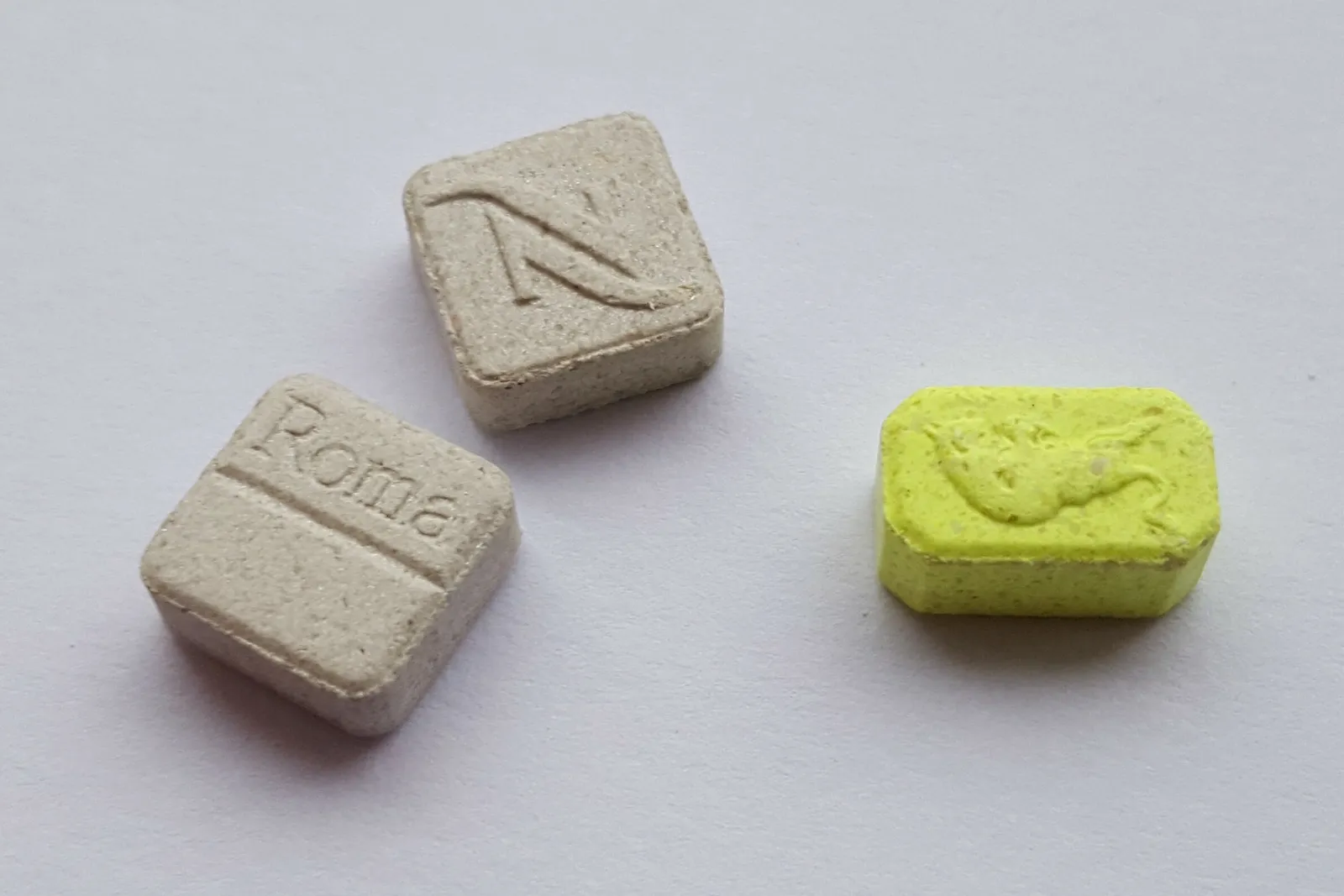
Both are street names for MDMA. Ecstasy usually means a pressed tablet with a stamped logo; molly is a powder or crystal marketed as purer. Neither name tells you what is inside. NIDA warns that pills and powders sold as MDMA may contain other drugs, including ketamine, amphetamine, methamphetamine and synthetic cathinones, the family that takes in mephedrone and cat, and that fentanyl has increasingly turned up in the drug supply.
How is MDMA taken, and how long does it last?
MDMA is usually swallowed as a tablet or capsule, or the powder is dabbed or snorted. The effects start about 45 minutes after a dose, peak 15 to 30 minutes later and last an average of three hours, according to NIDA. Feeling little in the first half hour is no reason to take more. The short high is also why people redose through a long night. Pupils widen, the jaw clenches, and body temperature and heart rate rise.
What does MDMA do to your body and brain?
MDMA raises body temperature, speeds up the heart and releases a large share of the brain’s serotonin at once. Afterwards the brain has spent what it released, and that debt is what the next few days feel like. With repeated use MDMA depletes serotonin, which over time may raise the risk of anxiety and depression, NHS inform in Scotland warns. NIDA lists poor sleep, confusion, paranoia and problems with memory or attention among its effects.
Is MDMA addictive?
Yes, MDMA can be addictive; the clearest evidence comes from studies of people who use it regularly. In a study published in 2014, McKetin and colleagues interviewed 214 regular ecstasy users in Australia, and 31% of them met the criteria for dependence in the past year. NIDA calls MDMA potentially addictive and lists the signs to watch for: continued use despite the downsides, tolerance, withdrawal effects and craving. Tolerance builds quickly, StatPearls notes, and people who answer it with bigger doses are at risk of complications.
A bad comedown on its own is not a diagnosis. In the same study, strict withdrawal criteria were met by only 1% of the sample; counting every ordinary comedown as withdrawal pushed that figure to 75%. The pattern across weeks is what counts:
| Ordinary comedown | Signs of dependence | Medical emergency |
|---|---|---|
| Low mood, fatigue and poor sleep in the days after use | Using more often than planned, or needing more to feel anything | Overheating, fitting or unresponsive |
| Improves on its own with rest, food and time | Thinking about the next session between weekends | Rigid muscles, severe agitation or confusion |
| No craving to redose once the effect has worn off | Using despite it costing money, sleep, work or a relationship | Suspected serotonin syndrome after mixing with antidepressants |
Why is MDMA so hard to stop?
For a lot of regular users MDMA became the quickest way into a version of themselves that felt easier: less guarded in a crowd, able to talk instead of standing at the edge of the room. Underneath there is often social anxiety, low mood, burnout or an old hurt the drug was managing. If only the pills go, the anxiety is still waiting on the next Friday.
That is why at Renewed Life Center we treat the MDMA and the anxiety, low mood or trauma under it in one place, on one plan. Ruby Weber, the psychologist who heads psychology at the centre, has more than 20 years in the addictions field with South African and international clients and leads that side of the work. More on why this matters: dual diagnosis treatment.
What is “suicide Tuesday”, and how long does a comedown last?
“Suicide Tuesday” is the midweek low after weekend MDMA use, and the comedown behind it can last most of a week. In a classic 1997 study by Curran and Travill, users rated their mood as raised on day one but significantly low by day five, and some scored in the range for clinical depression. For most people it just feels flat.
A low that sits closer to depression, or comes back harder every week, needs professional help early rather than another weekend to see if it passes. If you are thinking about ending your life and might act on it, or cannot keep yourself safe, get emergency help now rather than waiting for a reply from us; the Suicide Crisis Helpline, 0800 567 56711, also answers day and night. When the lows and the MDMA come together, you or someone close to you can talk it through with us. In treatment your own counsellor sees you one-to-one every week, so the midweek crash is worked through with someone who knows your story rather than sat out until Friday.
Can you overdose on MDMA?
Yes, you can overdose on MDMA, but deaths usually come from overheating or low blood sodium rather than the dose alone: StatPearls names hyperthermia and hyponatraemia as the two most frequently reported causes of MDMA-related death4, while noting that deaths overall are rare. A hot, crowded dance floor makes both more likely.
Too much water is the less known danger. MDMA can trigger a hormone that stops the body making urine, so extra water upsets the body’s salt balance; when sodium drops far enough the brain swells. NHS inform in Scotland advises around half a pint, 284ml, an hour1 and warns against drinking much more. Women carry more of this risk: at one rave party studied by researchers, 26.7% of women who used MDMA developed low sodium during the event, against 3% of men.
If MDMA is already part of the night: what lowers the danger
- do not combine it with antidepressants, especially an MAOI
- pace water at around half a pint (284ml) an hour, and not much more
- take regular breaks from dancing and from heat
- do not redose through the night to chase the first peak
If someone on MDMA is overheating, has a seizure, becomes confused or rigid, or cannot be woken, call local emergency services immediately: this needs an ambulance, not another bottle of water. Do not wait for a WhatsApp reply.
Is it dangerous to mix MDMA with antidepressants?
Yes, and how dangerous depends on the type. A 2022 systematic review found the most serious illness came from MDMA taken with an MAOI such as moclobemide or phenelzine, because MAOIs block the breakdown of serotonin. SSRIs are less likely to push serotonin to life-threatening levels, but they dull the high, which tempts people to take more. Do not stop or change a prescribed antidepressant on your own; talk to the doctor who prescribed it. If you come to us, Dr John Wulz, our GP, who has experience in mental health and emergency medicine, reviews the medication you already take.
How common is ecstasy use in South Africa, and is it legal?
Ecstasy rarely shows up as the main reason people enter treatment here: under 1% of admissions across regions in the latest SACENDU reporting period, run by the South African Medical Research Council, and none recorded for KwaZulu-Natal or the Eastern Cape. SACENDU’s reading is that people may not be seeking treatment for it. MDMA is not legal in South Africa: SAHPRA lists it in Schedule 7, alongside heroin and LSD. Regular users often add drink or cocaine to the same night: see mixing cocaine and alcohol.
When should you seek help for ecstasy use?
If you are asking whether this is you, seek help once ecstasy use has stopped being occasional: most weekends, a second or third dose to chase the peak, or a Tuesday crash you meet with dread rather than tiredness. Three questions make it clearer:
- Have you planned to skip a weekend and used anyway?
- Do you find going out without it hardly worth the effort?
- Has it cost you sleep, money, work or a relationship, and you kept going?
One yes is worth a conversation. Waiting for a quieter month rarely settles it on its own: if the MDMA was covering anxiety or low mood, that is still there when the weekends stop, and so is the pull back to them. Write to our team with what you take and how often, and we will talk through your situation and the next steps for treatment. If MDMA comes with drink most days, sleeping tablets or benzos, do not stop those suddenly on your own; message us first.
How is ecstasy addiction treated?
Ecstasy addiction is treated mainly with psychological therapy. CBT takes apart the thought “I can’t enjoy this without it”, and DBT gives skills for the urge and for the Tuesday low; both are among the treatments the WHO and UNODC international standards list as effective for drug use disorders. Schema therapy, EMDR and TRE work on the old patterns and trauma the drug was keeping quiet, and relapse prevention maps the people, places and playlists that lead back.
Being away from the usual weekends helps. You live in the house, with group work every weekday and drug and alcohol tests on arrival and at random during the stay.
The programme is run by Nikki Edwards, our Programme Director and Clinical Manager, who has 11 years in recovery. A doctor examines you after you arrive, and if drink or pills mean you need a medical detox, our medical team runs it.
Want to talk this through with someone who knows MDMA? Ask what MDMA treatment involves.Want to talk this through with someone who knows MDMA? Call +27 79 880 0045, free and confidential.
Treatment phases and length
Not everyone who uses at weekends needs a residential stay: the assessment decides the level of care, and our outpatient programme is for people who need structured treatment but not a stay in the house. When residential care fits, you live in the house in Lakeside, a residential suburb of Cape Town with the mountain behind it and the beach a short drive away. Most clients stay into a second month, and freedom comes back step by step:
- the first month: you live at the centre, get safe and steady, with detox if needed and therapy every weekday;
- the second month: deeper work on trauma, relationships and old patterns, with family therapy and a plan for the longer term;
- the Recovery Integration Programme, if you want it: you still live with us and keep the therapy, but can go out on your own in the afternoons;
- sober living on the same property: you work or study by day and come back to a sober house in the evening, with regular drug and alcohol tests and continued counselling.
If you cannot step away from home, the outpatient programme runs the weekday groups while you live at home. We also treat what often comes with MDMA, from cocaine and alcohol to gambling.
Post-treatment support for you and your family
Every discharge includes a written relapse-prevention plan built for your home. Families can join a video group every week and visit from the first week, so the people you go home to understand what changed. We keep in touch with former clients, and anyone who has been through the programme can always come back to us.
From first call to admission
-
A free first call
Twenty to forty minutes by WhatsApp, video or phone, confidential, and we reply the same day you write. Most often you speak to John Roberts, our Senior Recovery Specialist and Operations Manager, who has 39 years in recovery.
-
Clinical assessment
Forty-five to ninety minutes, covering the substance use and what sits underneath it.
-
Admission
Can be immediate, and typically happens within three days of first contact. If you come from abroad, we meet you at Cape Town International.
Questions people ask
No. MDMA is chemically related to amphetamines but also has psychedelic effects, while meth, called tik in South Africa, is a pure stimulant. They do get mixed: NIDA reports methamphetamine among the drugs found in pills sold as ecstasy.
Most of what people call MDMA withdrawal is the comedown: low mood, tiredness and poor sleep that lift over days. If MDMA is the only thing you take, stopping does not need a medical detox; the hard part is the low mood and the weekends. If it comes with drink most days, sleeping tablets or benzos, do not stop those suddenly on your own. Message us first; whether you need a detox is decided by our medical team after assessing you.
Around half a pint, 284ml, an hour, NHS inform in Scotland advises, and not much more. Drinking too much water can dangerously lower blood sodium.
The low can last most of a week, with mood lowest around day five in one classic study. It usually lifts on its own with rest, food and time.
You pay us directly, with no claim forms. The fee depends on the programme and how long you stay; we give it on the first call and send it in writing the same day.
Then you can make the first call yourself. A relative can talk to our team before the person has agreed to come, and the conversation is as much about what you are dealing with as about them. There is a longer guide on how to talk to a loved one about rehab.
A weekend habit that has taken over? Talk to us.
A free, confidential call of twenty to forty minutes, for yourself or someone you love. We treat the anxiety or low mood under the MDMA together with the drug. We reply the same day, and admission is typically within three days.
Writing for someone else? You do not need their permission to message us.
or call +27 79 880 0045
Rather we call you back? Leave your number

Sources
- NHS inform (Scotland), MDMA (Ecstasy)
- US National Institute on Drug Abuse, MDMA (Ecstasy/Molly)
- McKetin et al., The effect of the ecstasy come-down on the diagnosis of ecstasy dependence, Drug and Alcohol Dependence, 2014
- StatPearls, MDMA Toxicity
- Curran and Travill, Mood and cognitive effects of MDMA, 1997
- Field study of hyponatraemia among MDMA users at a rave party
- Systematic review, MDMA and antidepressant interactions and serotonin syndrome, 2022
- SACENDU Research Brief, South African Medical Research Council, volume 29(1), 2026
- SAHPRA, Consolidated Schedules, 1 August 2025
- UNODC and WHO, International Standards for the Treatment of Drug Use Disorders, 2020
- South African Depression and Anxiety Group, helplines
This article is general information, not medical advice.