

What is oxycodone, and is it available in South Africa?
What is oxycodone, and is it available in South Africa? Strength versus morphine, the FDA boxed warning, the danger with alcohol and benzodiazepines, SAHPRA’s Schedule 6 status, and how dependence is treated.

In short
- Yes, oxycodone is available in South Africa, but only on a doctor’s prescription: SAHPRA lists it as a Schedule 6 medicine. It is a strong opioid painkiller, roughly twice as potent as morphine by weight when taken by mouth. It is sold here as OxyNorm capsules and known internationally in slow-release form as OxyContin.
- The FDA gives it a boxed warning, the strongest safety label a medicine can carry, for addiction, abuse and life-threatening slowed breathing. Mixing it with alcohol or benzodiazepines raises that risk sharply, and can be fatal.
- Renewed Life Center in Lakeside, Cape Town, treats prescription drug dependence residentially. Medical detox happens on site and medication is decided by a doctor, not a fixed schedule. Admission can be immediate, typically within three days.
Not sure whether a prescription has quietly turned into a problem? Book a free, confidential call. Twenty to forty minutes, no obligation, and we reply the same day.
A doctor writes a script for oxycodone after surgery, a bad back, or pain that will not settle. Most people never think about the tablet again once the pain does. For some, the tablet keeps mattering long after the pain has gone. The question that eventually gets typed into a search bar is simpler than the situation feels: what actually is this, and is it even legal here.
This page covers what oxycodone is, how strong it is, and what South African law says about it. It also covers what happens when stopping turns out to be harder than starting was.
What is oxycodone, and what forms does it come in?
Oxycodone is a strong opioid painkiller, prescribed for moderate to severe pain. It is sold as an immediate-release capsule, branded in South Africa as OxyNorm. A slow-release tablet, taken less often, is branded internationally as OxyContin.
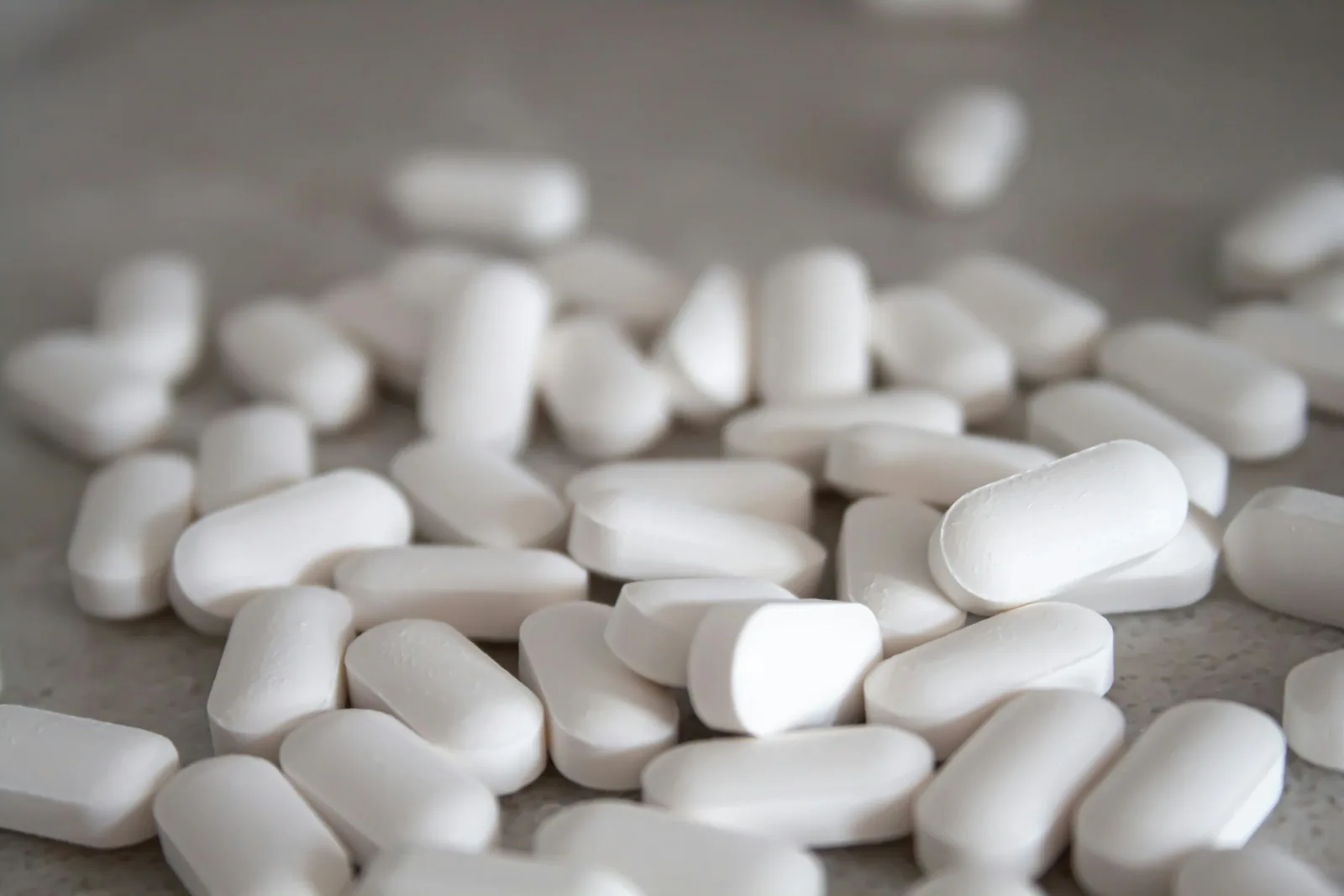
Both forms work on the same opioid receptors in the brain and spinal cord that manage pain. At the same time, they produce the relaxed, contented feeling that makes opioids attractive to misuse. The immediate-release form is meant for short bursts of pain and wears off within a few hours. The extended-release form is built to release steadily over the day. That is also why tampering with the tablet, crushing or dissolving it, defeats the safety mechanism and delivers the full dose at once.
How strong is oxycodone compared to morphine?
Oxycodone is roughly twice as potent as oral morphine by weight. The prescribing information both drugs carry sets out the equivalence doctors use to judge tolerance and dosing. That is why a dose that sounds small on paper can still be a strong opioid dose in practice.
OxyContin’s own FDA prescribing information defines an opioid-tolerant patient as someone taking, for a week or longer, at least 60 mg of oral morphine a day, or 30 mg of oral oxycodone a day, among other equivalent opioid doses. Put simply, roughly half the milligrams of oxycodone do the same job as morphine. That is the practical meaning of “twice as strong”.
What does the FDA’s boxed warning on OxyContin say?
It is the strongest safety warning a US medicine can carry. It covers three life-threatening risks at once: addiction, abuse and misuse that can lead to overdose and death; serious or fatal slowed breathing, especially early in treatment or after a dose increase; and dangerous interactions with other sedating drugs.
The label states plainly that because the use of OxyContin exposes patients and other users to the risks of opioid addiction, abuse, and misuse, which can lead to overdose and death, doctors are told to assess each patient’s risk prior to prescribing and reassess regularly. It separately warns that serious, life-threatening, or fatal respiratory depression may occur, especially during initiation or following a dosage increase.
The warning exists because the numbers behind it are real. Opioids, oxycodone among them, were involved in an estimated 54,743 of the roughly 80,391 US drug overdose deaths recorded in 2024, according to the CDC. Overall overdose deaths fell by 26.9% that year, but the opioid figure is still a very large number. It is not a South African statistic. It is still the reason this medicine carries the warning it does, wherever it is sold.
Why is oxycodone dangerous with alcohol or benzodiazepines?
Because all three slow breathing through overlapping pathways in the brainstem, and combining them adds up faster than the doses alone suggest. The FDA prescribing information warns that using opioids together with benzodiazepines or alcohol can cause profound sedation, slowed breathing, coma and death. In an emergency, call an ambulance on 10177, or 112 from a mobile.
The FDA’s boxed warning is direct: concomitant use of opioids with benzodiazepines or other central nervous system depressants, including alcohol, may result in profound sedation, respiratory depression, coma, and death. SAHPRA’s package insert for OxyNorm carries the same warning from the South African regulatory side. It notes that oxycodone potentiates the effects of tranquillisers, anaesthetics, hypnotics, antidepressants, sedatives, alcohol and other opioids. If someone’s breathing has slowed, they are hard to wake, or their lips or fingertips look blue after mixing oxycodone with alcohol or a benzodiazepine, that is an emergency. Call an ambulance immediately on 10177, or 112 from a mobile.
What is oxycodone’s legal status in South Africa?
Oxycodone is a Schedule 6 medicine under South Africa’s medicines regulator, SAHPRA, the same control tier as other strong prescription opioids. A doctor’s prescription is required, the prescription is tightly controlled, and pharmacies must record and store it accordingly.
SAHPRA’s consolidated schedule of medicines lists oxycodone under Schedule 6. The immediate-release form is registered and sold in South Africa as OxyNorm. Its official package insert confirms that Schedule 6 status.
Is OxyContin still prescribed, and why did the formula change?
Yes, in a different form from the one first sold in the 1990s. The original OxyContin tablet was pulled from the market once a harder-to-crush version was approved. That reformulated version, not the original, is what doctors prescribe today wherever the brand is sold.
According to the FDA’s own determination, original OxyContin, approved in 1995, was withdrawn from sale for reasons of safety or effectiveness once the benefits of the original version no longer outweighed its risks. A reformulated version, approved in April 2010, replaced it, and the FDA approved labelling changes describing that version’s abuse-deterrent properties on 16 April 2013. The tablet became harder to crush or dissolve for injecting or snorting as a result. It remains a Schedule II controlled substance in the United States, prescribed under close monitoring rather than freely available.
How does dependence on oxycodone develop?
Through the same mechanism that makes it work as a painkiller. The brain adapts to a steady opioid signal, needs more of it for the same effect, and starts to feel wrong without it. The slide from tolerance into dependence is gradual. That is exactly why people so rarely notice it while it is happening.
SAHPRA’s package insert for OxyNorm describes the pattern directly: the patient may develop tolerance to the medicine with chronic use, requiring progressively higher doses to maintain pain control, and prolonged use may also lead to physical dependence and a withdrawal syndrome upon abrupt cessation. None of that requires misusing the medicine. It can happen to someone taking exactly the dose a doctor prescribed, for exactly the reason it was prescribed.
Working out where ordinary pain management ends and dependence begins is a clinical judgement, not something to guess at alone. Dr Ruby Weber leads the psychological side of treatment at Renewed Life Center, with more than two decades in the addictions field and South African and international clients. A psychiatrist selects any medication where it is genuinely needed.
If a prescription has quietly become the thing you plan your day around, talk to us, free and confidential. We reply the same day.
What happens when you stop taking oxycodone?
On its own, withdrawal is miserable rather than life-threatening. Restlessness, watery eyes, a runny nose, sweating, chills, muscle aches, anxiety, cramping, nausea and a racing heart are the typical withdrawal symptoms. They start after the last dose and ease over the following days, though some effects can linger longer.
The MSD Manual Professional Edition is direct about the danger level: the opioid withdrawal syndrome is self-limited and, although severely uncomfortable, is not life threatening. It also notes that minor metabolic and physical withdrawal effects may persist for up to 6 months. SAHPRA’s OxyNorm insert lists what that syndrome actually feels like: restlessness, lacrimation, rhinorrhoea, yawning, perspiration, chills, muscle pain, anxiety, joint pain, abdominal cramps, insomnia, nausea, vomiting, diarrhoea and a rise in blood pressure and heart rate.
What is genuinely dangerous is not the withdrawal itself but what happens afterwards. Tolerance falls fast once someone stops. A dose that felt normal a few weeks earlier can be enough to stop their breathing if they return to it at the old level. That risk is a large part of why a supervised detox and a supported return matter more than gritting it out alone at home.
What is naloxone, and when is it used?
Naloxone is the emergency antidote to an opioid overdose. It temporarily reverses slowed or stopped breathing, buying time until paramedics arrive. It works on oxycodone the same way it works on any other opioid.
In the United States, the FDA approved the first over-the-counter naloxone nasal spray, a 4 mg dose, on 29 March 2023. That put the antidote within reach without a prescription. SAHPRA’s OxyNorm insert sets out the clinical dosing for an overdose: naloxone is administered intravenously, 0.4 to 2 mg for an adult, repeated at two minute intervals if there is no response. Anyone with slowed or stopped breathing after taking oxycodone needs an ambulance straight away, on 10177, or 112 from a mobile. That is true whether or not naloxone is available on the spot.
Where a detox is needed, it happens under close medical supervision rather than at home. Our resident GP, Dr John Wulz, examines every arrival, and nurses are on duty around the clock. If oxycodone is layered on top of alcohol, sedatives or anything else, the whole picture is managed in one place.
Coming off safely matters more than doing it fast. Book a free call, no obligation, we reply the same day.
How is oxycodone dependence treated?
With medical detox where it is needed, followed by therapy that addresses why the medication mattered as much as it did. In some cases a doctor may also prescribe an approved medication to support recovery. That runs alongside the psychological work, not in place of it.
The FDA recognises three medications for opioid use disorder, buprenorphine, methadone and naltrexone, all three demonstrated to be safe and effective. A Cochrane review of methadone maintenance found it statistically significantly more effective than non-pharmacological approaches at keeping people in treatment and suppressing heroin use. At Renewed Life Center, any such medication is prescribed and monitored by a doctor as part of a wider treatment plan, alongside individual and group therapy. It is never a fixed withdrawal schedule handed over on day one.
Prescription Drug Abuse and Medication Abuse are both listed among the conditions we treat. Oxycodone dependence sits under that umbrella whether it began with a legitimate prescription or not. Detox happens on site, and medication decisions are always made by a doctor who has actually assessed the person in front of them.
Why do people choose Renewed Life Center for oxycodone dependence?
Because coming off an opioid safely needs medical cover, not just willpower. Here, the medical side and the therapy sit in the same house. A resident GP assesses every arrival, a doctor prescribes only where medication is needed, and nurses watch around the clock. The same team stays involved from the first assessment through to discharge.
Medical detox, not a fixed schedule. Any withdrawal support is decided by risk assessment and clinical judgement, with medication prescribed only where a doctor sees the need. It is not decided by a script agreed before anyone met you.
The psychology runs alongside the medicine. Dr Ruby Weber leads the psychological side of treatment, with more than two decades in the addictions field and clients from South Africa and abroad. A psychiatrist selects medication where it is needed.
Treatment runs in phases of one month, with a sober living programme afterwards for anyone who wants a slower return. The same team stays involved throughout, rather than handing over partway.
The house is in Lakeside, in Cape Town’s Southern Suburbs, with staff on site 24 hours a day. Payment is direct, so the clinical picture sets the length of stay. Airport transfers are included both ways for people flying in.
How do you start?
With twenty to forty minutes on WhatsApp, video or phone, free and confidential. A clinical assessment of 45 to 90 minutes follows within three days. Admission can be immediate, typically within three days of first contact.
How you get here
-
A free first call
No obligation, no judgement. A partner or parent can make it instead of you.
-
Clinical assessment
What you take, how often, what else is going on, and what happened the last time you tried to stop.
-
Admission
Can be immediate. More on drug addiction treatment in Cape Town.
Write to us about the medication, or book a free, confidential call straight away.
Questions people ask
Oxycodone is the active substance. OxyContin is the brand name for the slow-release tablet form. OxyNorm is the brand name for the immediate-release capsule form sold in South Africa.
Yes, in its reformulated, harder-to-crush form. The original tablet was withdrawn from sale once a safer version was approved. That newer version is what gets prescribed today, still under Schedule II control in the United States.
Yes. Oxycodone is a Schedule 6 medicine under SAHPRA. The immediate-release form is registered and sold as OxyNorm, available only on prescription from a doctor.
Oxycodone is prescribed here under Schedule 6, and the immediate-release form is registered and sold as OxyNorm. Whatever the brand on the box, the rules are the same: a doctor’s prescription, a controlled pharmacy record, and the risks the FDA boxed warning describes.
The main symptoms typically settle within about a week, though some effects can linger for months. It is severely uncomfortable but, on its own, not life threatening, according to the MSD Manual, unless someone returns to their old dose after their tolerance has dropped.
Yes, seriously so. Both slow breathing through overlapping pathways, and combined they can cause profound sedation and life-threatening respiratory depression. If someone’s breathing slows or they cannot be woken after mixing the two, call an ambulance immediately.
This article is general information, not medical advice.
Sources
- FDA-approved prescribing information for OxyContin, DailyMed
- SAHPRA, Consolidated Schedules of medicines, 1 August 2025
- SAHPRA, approved package insert for OxyNorm (Mundipharma)
- FDA determination on original OxyContin withdrawal and reformulation, Federal Register, 2013
- CDC, provisional drug overdose death data, 2024
- FDA, Information about Medications for Opioid Use Disorder (MOUD)
- Cochrane, methadone maintenance therapy versus no opioid replacement therapy
- MSD Manual Professional Edition, Opioid Toxicity and Withdrawal
- FDA, approval of first over-the-counter naloxone nasal spray, 2023
If a prescription has become the thing you plan your day around, talk to us.
A free, confidential call of twenty to forty minutes, for yourself or someone you love. We reply the same day, and admission can be immediate, typically within three days of first contact.
Free first conversation of 20 to 40 minutes, by WhatsApp, video or phone. We reply the same day.

Leave a request for consultation
Tell us a little about the situation. The first conversation is free and confidential, and we reply the same day.