

How long does weed stay in your system?
How long does weed stay in your system? Urine windows by how often you use, test thresholds, passive smoke, South African law, and what it means if quitting before a test feels hard.
In short
- For a single joint, THC is usually out of your urine within three to four days. Regular, heavy use can stretch that toward three weeks, using the cutoffs standard workplace testing programmes apply. The popular idea that it lingers for thirty days or more is mostly overstated.
- You cannot flush THC out faster. It is stored in body fat and released slowly. Water, exercise or a detox drink change almost nothing about that, except how diluted your sample looks, which can flag it as tampered.
- If quitting before a test feels harder than it should, that difficulty is worth listening to. Renewed Life Center in Lakeside, Cape Town, treats cannabis dependence alongside whatever it was doing for you. Admission can be immediate, typically within three days.
Waiting on a number before you decide what to do next? Book a free, confidential call instead. Twenty to forty minutes, no obligation, and we reply the same day.
Most people land on this page with a test coming up: a new job, a court date, a parent who wants proof, a partner asking straight out. The honest answer is a range rather than a single number. How long weed stays in your system depends on how often you use it and how much of you is fat, not on the calendar.
Some people land here for a different reason. They tried to stop before the test and found it harder than expected. That is a different question, with a different answer further down this page.
Why does THC stay in your system longer than the high lasts?
THC itself clears from your blood within hours. But it dissolves in fat, gets stored in fatty tissue, and is released slowly back into the blood. There it breaks down into a metabolite, THC-COOH, which is what urine tests are built to detect. That metabolite, not the high, is what keeps showing up days or weeks later.
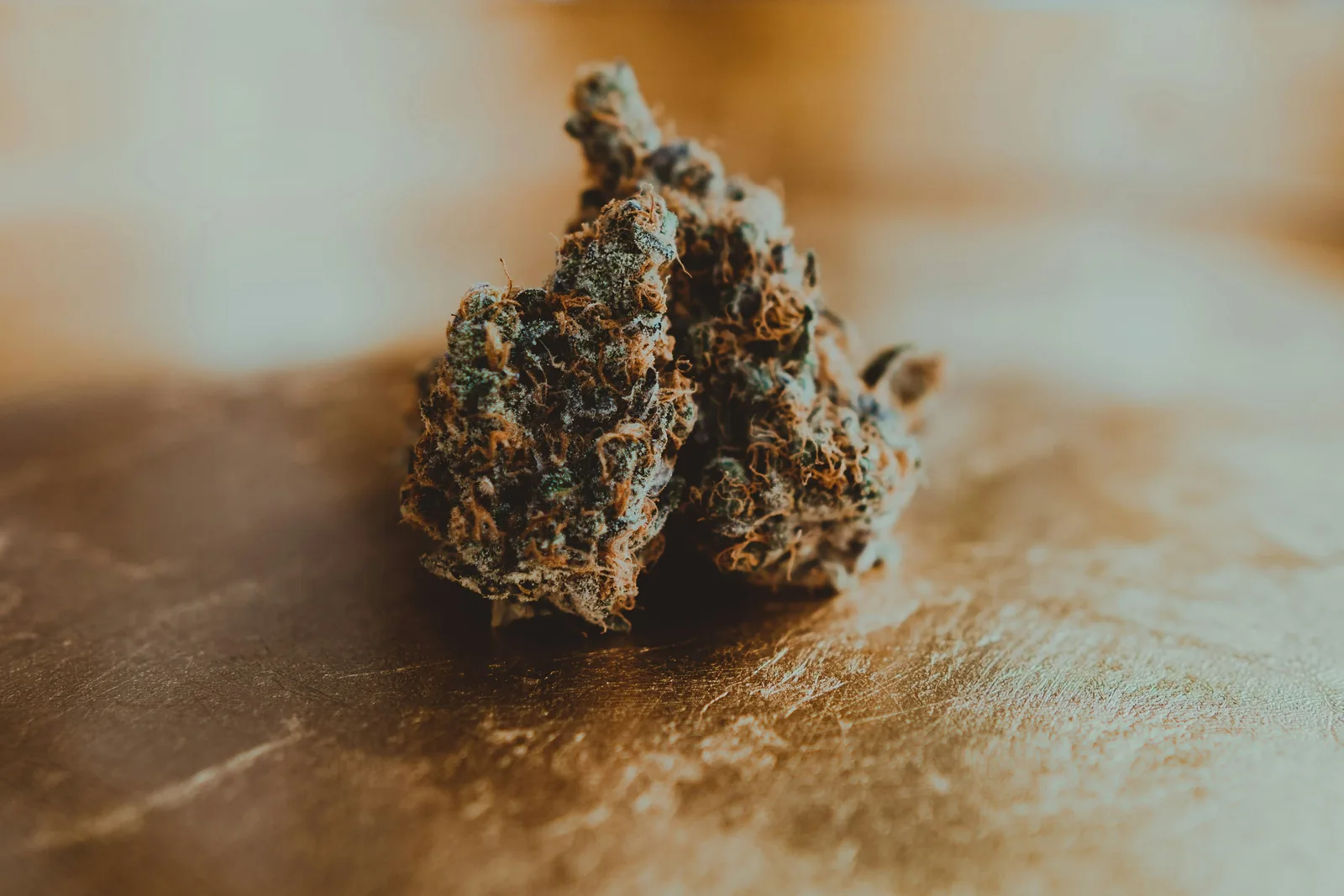
According to the National Institute on Drug Abuse, the noticeable effects of smoked cannabis generally last from 1 to 3 hours, while detectable amounts of THC may remain in the body for days or even weeks after use. That gap between feeling normal again and testing clean is the entire reason this question gets asked.
What affects how long weed stays detectable?
Four things move the window more than anything else: how often you use, how much you use in one sitting, how much body fat you carry, and how fast your own metabolism runs. Someone smoking daily for a year clears THC far more slowly than someone who tried it once at a party.
Potency plays its own part too. Cannabis on the street today carries considerably more THC than it used to. Between 1995 and 2022 the average potency of cannabis seized by law enforcement in the United States rose from 3.96% to 16.14%. That is roughly four times stronger, according to the National Institute on Drug Abuse. More THC going in generally means more sitting in fat to clear afterwards.
What counts as a positive test?
Most workplace and legal urine tests use a two step cutoff. A screening result at or above 50 nanograms per millilitre counts as presumptively positive. A confirmation test then checks for the THC metabolite at 15 nanograms per millilitre before the result is reported as positive.
Those are the thresholds set out in the Mandatory Guidelines for Federal Workplace Drug Testing Programs, the US federal standard for workplace testing. A cheaper home test kit can use a different cutoff, which is one reason two tests on the same sample sometimes disagree.
How long does weed stay in your urine, by how often you use?
There is no single number, but there is a reliable range. A single use clears from urine in about three to four days at the standard cutoff. Occasional use rarely stays detectable past a week. Regular, heavy use is the only pattern that can stretch toward three weeks.
| Pattern of use | Approximate window in urine |
|---|---|
| Single use, one occasion | About 3 to 4 days |
| Occasional use, a few times a month | Rarely longer than 7 days |
| Regular, heavy or daily use | Up to 21 days, rarely longer even at a lower cutoff |
| What most people assume | 30 days or more, more a common belief than a measured fact |
Windows at the standard 50 ng/mL screening cutoff; the heavy-use row also holds at a stricter 20 ng/mL cutoff. Source: the Drug Court Review analysis of the marijuana detection window, National Drug Court Institute.
Blood and saliva tests are built for recent use rather than a habit from weeks back, and both clear faster than urine does. Hair tests work the opposite way: they miss very recent use almost entirely and instead hold a longer record, because the drug binds into the hair as it grows. None of the three has a single official window the way the urine cutoffs do. Treat any precise day count you see for blood, saliva or hair as a rough guide rather than a guarantee.
Can secondhand smoke make you test positive?
Almost never in ordinary situations. Walking past someone smoking outside is very unlikely to register on a test. It becomes a real possibility only in an extreme, enclosed situation, such as sitting for an hour in an unventilated room or car while others smoke heavily nearby.
The National Institute on Drug Abuse puts it plainly: in terms of just walking by cannabis smoke outside, a positive result is unlikely. That is because it takes a high concentration of THC to register. The exception is a sealed space at close range. NIDA notes that sitting in a small car with the windows up while others smoke heavily could lead to a positive test. In one controlled study, non-smoking participants exposed for an hour to high-THC marijuana (11.3% THC concentration) in an unventilated room showed positive urine assays in the hours directly following exposure. “I was just in the room” is rarely a real defence, but it is not impossible either.
Can you flush THC out of your system faster?
Not in any way that changes the biology. THC is stored in fat and released slowly no matter how much water you drink, how hard you exercise or what detox tea you buy. Drinking unusually large amounts of water can dilute a urine sample enough to flag it as tampered, which causes its own problem.
The only thing that reliably clears THC is time. The same four factors covered above govern how fast that happens: how often you used, how much, your body fat and your metabolism. Nothing sold at a pharmacy or a head shop changes that arithmetic.
Where does South African law stand on cannabis and drug tests at work?
Personal cannabis use by an adult has not been a criminal offence in South Africa since the Constitutional Court’s ruling. That position is now written into law through the Cannabis for Private Purposes Act 2024. That legal change did not remove an employer’s right to a drug-free workplace, and the two rules now sit side by side.
The Department of Justice states that since the judgement, the use or possession of cannabis by an adult for private purposes has not constituted a criminal offence. The Cannabis for Private Purposes Act, 2024 sets out how that works in practice.
Work is a separate question, and the Labour Appeal Court drew the line in Enever v Barloworld Equipment in 2024. The case concerned an employee whose blood test came back positive for cannabis, although nobody had ever suspected her of being impaired at work. The court found that the use of a blood test alone without proof of impairment on the work premises is a violation of the appellant’s dignity and privacy. The judgment noted that her use of cannabis never impaired the performance of any of her duties nor was she ever suspected of being intoxicated. The court was just as clear about where that protection stops: the matter could well have been different for an employee found to be “stoned,” intoxicated or impaired during work hours, or who operates dangerous machinery.
In practice, cannabis use stays legal in private. But a positive test can still carry real consequences if your role involves safety or heavy machinery, or if a workplace policy treats any detectable trace as grounds for action, whatever a court might later decide.
If quitting before a test feels harder than expected, what does that mean?
It usually means the question was never really about the test. Most people who use cannabis occasionally can stop for a week without much trouble. If you have tried and could not, or the thought of stopping makes you anxious, that sits closer to dependence than to bad luck.
It is more common than the stigma around cannabis suggests. Studies estimate that 22% to 30% of people who use cannabis have cannabis use disorder, according to the National Institute on Drug Abuse. The CDC puts the figure at roughly 3 in 10, with the risk climbing for people who started young or use frequently. In South Africa, cannabis is now the single largest reason people enter specialist addiction treatment. According to the South African Medical Research Council’s SACENDU research brief, 37% of admissions nationally list it as the primary substance, up from 33% the year before, and it accounts for 73% of admissions among people 18 and under.
This is where it helps to talk to someone who assesses this for a living, rather than guess from a symptom list. Dr Ruby Weber heads psychology at Renewed Life Center. She has more than two decades in the addictions field, working with both South African and international clients on chemical and behavioural dependence. She has a particular interest in how trauma feeds into it.
If cannabis has become harder to put down than you expected, talk to us, free and confidential. Twenty to forty minutes, and we reply the same day.
What does cannabis withdrawal actually feel like?
Irritability, anxiety, disturbed sleep, low appetite and cravings, starting within a day or two of stopping and peaking within the first week. It is rarely dangerous in the way alcohol or opioid withdrawal can be, but it is uncomfortable enough that it derails most unsupported attempts to quit.
According to a review published in the journal Addiction, symptom onset typically occurs 24 to 48 hours after cessation and most symptoms generally peak at days 2 to 6, with some symptoms lasting up to 3 weeks or more in heavy cannabis users. That tail end, week three and beyond, is where most people who try to stop alone go back to using, not for lack of willpower but because nobody warned them it would still be there.
Cannabis is often one part of a wider pattern, alcohol, sleeping tablets or something else alongside it. Our resident GP, Dr John Wulz, examines every arrival, and nurses are on duty around the clock, so any medical detox happens in the same house as the therapy.
The first week off is the hardest to manage alone. Book a free call, no obligation, we reply the same day.
Why do people choose Renewed Life Center for cannabis dependence?
Because cannabis rarely travels alone, and here it does not have to be untangled by yourself. Anxiety, low mood, sleep problems and whatever the cannabis was quietening are treated on the same plan, by people you can name, in one house.
One team, not a referral. Dr Ruby Weber leads the psychological side of treatment and works with both chemical and behavioural dependence. A psychiatrist selects medication only where it is genuinely needed.
Medical cover on site. A resident GP, Dr John Wulz, and 24-hour nursing mean detox can happen without moving anyone to a different building. That holds even if cannabis sits alongside alcohol, sedatives or anything else.
Treatment runs in phases of one month, with a sober living programme for anyone who wants a slower return home. The same team stays involved throughout.
The house is in Lakeside, in Cape Town’s Southern Suburbs, with a mountain ridge behind the property and staff on site 24 hours a day. Payment is direct, so the clinical picture decides how long treatment takes rather than an outside limit. Airport transfers are included both ways for anyone flying in.
How do you start?
With twenty to forty minutes on WhatsApp, video or phone, free and confidential. A clinical assessment of 45 to 90 minutes follows within three days, and admission can be immediate, typically within three days of first contact.
How you get here
-
A free first call
No obligation, no judgement. A parent or partner can make it instead of you.
-
Clinical assessment
What you use, how often, what else is going on, and what happened the last time you tried to stop.
-
Admission
Can be immediate. More on drug addiction treatment in Cape Town.
Write to us about the cannabis use, or book a free, confidential call straight away.
Questions people ask
Usually, if enough time has passed. A single use is typically undetectable after about three to four days at the standard cutoff. A large dose or a stricter cutoff can push that further out.
Blood tests are built to catch very recent use and clear faster than urine tests do. There is no single official window the way there is for urine, so treat any exact figure you see with some caution.
No. THC is stored in fat, not in fluid, so drinking water changes nothing about how fast it clears. Overdoing it can dilute a sample enough to be flagged as tampered, which is its own problem.
Private personal use by an adult is no longer a criminal offence. That follows the Constitutional Court’s ruling and the Cannabis for Private Purposes Act 2024. Workplace rules and safety-sensitive roles are a separate matter, and a positive test can still carry consequences there.
A need for more to get the same effect, failed attempts to cut down, cravings, and continuing to use despite the cost to work, money or relationships. These are the everyday signs of cannabis use disorder. Two or more of those in the past year is worth a proper conversation.
This article is general information, not medical advice.
Sources
- National Institute on Drug Abuse, Marijuana Research Report
- National Institute on Drug Abuse, Cannabis (Marijuana) topic page
- Mandatory Guidelines for Federal Workplace Drug Testing Programs, Federal Register, 2023
- Cary, The Marijuana Detection Window, Drug Court Review, National Drug Court Institute
- National Institute on Drug Abuse, What Do Drug Tests Really Tell Us?
- South African Department of Justice and Constitutional Development, statement on Cannabis for Private Purposes Act regulations
- Enever v Barloworld Equipment, Labour Appeal Court of South Africa, 2024
- South African Medical Research Council, SACENDU Research Brief, volume 29(1), 2026
- CDC, Cannabis Use Disorder
- Connor et al., Cannabis Use and Cannabis Use Disorder, Addiction, 2022 (PMC)
If stopping before a test is harder than you expected, talk to us.
A free, confidential call of twenty to forty minutes, for yourself or someone you love. We reply the same day, and admission can be immediate, typically within three days of first contact.
Free first conversation of 20 to 40 minutes, by WhatsApp, video or phone. We reply the same day.

Leave a request for consultation
Tell us a little about the situation. The first conversation is free and confidential, and we reply the same day.