

How much does rehab cost in Cape Town and South Africa?
South African centres publish private rehab at about R50,000 to R300,000 or more a month, by tier, checked on 18 September 2026. Length of stay, staffing and what the fee actually covers move the total as much as the tier label does. Our own fee at Renewed Life Center we send by email, after a free first call.

In short
- Private rehab in South Africa spans about R50,000 to R300,000 or more a month.South African centres’ own price pages, checked on 18 September 2026, put mainstream private care at R50,000 to R100,000 for 24 to 28 days, extended stays at R100,000 to R200,000 or more, and the luxury tier from R200,000 upward.
- Registration is the law, not a courtesy.Every South African treatment centre must be registered with the Department of Social Development, and running one without that registration is a criminal offence carrying up to 12 months in prison.
- Medical aid covers part of it, in hospital only.Substance dependence is a prescribed minimum benefit, but the cover is hospital-based management for up to three weeks a year, and outpatient treatment is not included.
Want a figure for your own situation rather than a market range? Book a free, confidential call. We reply the same day.
You are trying to work out whether you or your family can afford treatment, and every site that answers the question does it with a different figure in a different currency. Some quote in rand, some in euros or dollars, and most do not say when the number was last checked.
This guide sets out what South African centres actually publish, tier by tier, with the date each figure was checked, plus what the law and your medical scheme actually promise. Both of those matter more to the final bill than the headline rate on its own.
What does private rehab cost in South Africa?
Private residential rehab in South Africa runs from about R50,000 a month at the mainstream end to R300,000 or more at the luxury end, according to South African centres’ own price pages, checked on 18 September 2026. No regulator publishes a market-wide price for private treatment, so every figure below is one named centre’s own rate card, not an industry survey.
| South African private rehab | Renewed Life Center, Cape Town |
|---|---|
| Mainstream private, 24 to 28 days | |
| About R50,000 to R100,000, per one South African rehab directory’s price guide | We send the fee and the full list of what it covers after a free call |
| Extended private, 6 to 13 weeks | |
| Often R100,000 to R200,000 or more, same source | We send the fee and the full list of what it covers after a free call |
| Luxury, 28 days | |
| From around R200,000 to R300,000 or more, same source; centres that market to international clients quote in foreign currency, for example about $15,000 to $33,000 for 28 days at one Mpumalanga centre | We send the fee and the full list of what it covers after a free call |
| Structured outpatient, 4 to 6 weeks | |
| Around R12,000 or more, same source | We send the fee and the full list of what it covers after a free call |
South African figures are guide prices published by named centres, checked 18 September 2026, not a market survey. Our own fee is not printed here: we send it in writing after the first call.
Two centres quoting the same word, luxury, can sit R300,000 apart, and a family comparing quotes on the headline number alone is comparing labels rather than programmes.
Mainstream private, 28 daysR50,000
Luxury tier, 28 daysR300,000
The bottom and the top of the range one South African rehab directory publishes for a 28-day private stay, both checked on 18 September 2026.
Source: a South African rehab directory price guide, updated 16 August 2026
Are there free or low-cost options?
Yes. South Africa’s Department of Social Development establishes and funds public treatment centres and public halfway houses under the Prevention of and Treatment for Substance Abuse Act, and non-profit organisations such as SANCA run programmes alongside them. Neither publishes a price list in the way private centres do, and a bed is not guaranteed on demand.
The trade-off is time rather than money: capacity is limited, so contact the Department of Social Development office in your province and ask what is available now, rather than assume a place is waiting.
Does medical aid cover rehab in South Africa?
Partly. Substance dependence is a prescribed minimum benefit under South African law, code 182T, but the benefit is defined narrowly: hospital-based management up to three weeks a year, the Council for Medical Schemes states. Most private residential programmes run 24 to 28 days, so the scheme’s own limit falls short of a standard admission before it even starts.
Outpatient treatment is excluded outright. “The PMB regulations however do not include the out-patient treatment for substance abuse,” the Council for Medical Schemes states. Renewed Life Center does not bill South African schemes directly, so confirm in writing, before admission, what yours will pay and for how long.
PMB hospital cover, per year21 days
Typical private admission28 days
The prescribed minimum benefit for substance dependence covers three weeks of hospital-based care a year; most private programmes run 24 to 28 days.
Source: Council for Medical Schemes, CMScript: Focus on Substance Use Disorders
Is rehab in South Africa regulated, and how do you check?
Yes, and checking is possible before any money moves. Since 2009, “no person may establish or manage any treatment centre… unless such treatment centre is registered,” the Prevention of and Treatment for Substance Abuse Act states, and running one unregistered is “guilty of an offence and liable on conviction to a fine or to imprisonment for a period not exceeding 12 months.” That is a legal requirement with a criminal penalty attached, not a courtesy the centre extends to you.
The British government makes the same point to its own citizens, more bluntly: “there are many unlicensed rehabilitation facilities operating in South Africa,” and travellers should “choose a reputable facility that is registered with the South African Department of Social Development or the Western Cape’s Substance Use Disorder Service,” GOV.UK’s guidance on South Africa, published 1 August 2024, states.
Two registrations worth checking before you pay a deposit
- The facility’s own registration with the Department of Social Development, required under the Prevention of and Treatment for Substance Abuse Act. Ask for the number, in writing.
- The named clinicians’ registration with the appropriate statutory body, such as the Health Professions Council of South Africa, which keeps a public register that families can check from outside the centre.
Neither check tells you whether the programme suits the person you are trying to help. Both tell you whether the centre is legally allowed to be doing this at all, and that is the cheaper question to ask first.
Why do quotes vary so much for the same programme?
Because centres draw the line between “included” and “extra” in different places, and the tier label does not tell you where. One Cape Town centre that prices in euros and pounds for European clients lists prescribed medication, doctor consultations and 24-hour nursing inside its weekly rate. A centre quoting a lower headline figure often bills exactly those items separately, and the gap only shows up once you ask.
Four lines to ask about before comparing two quotes
-
Individual therapy
How many sessions a week are inside the fee, and how many cost extra?
-
Medical detox and nursing
Is withdrawal management in the programme fee or billed by the day, with a named nurse on site?
-
Psychiatrist consultations and medication
Included, or invoiced separately each time they are needed?
-
What happens after discharge
Is a written relapse-prevention plan part of the fee, or an extra conversation you have to book?
Two quotes that look far apart on paper can converge by discharge day.
Does a longer stay cost more, and is longer better?
A longer stay always costs more in total, but South African centres and the research on treatment length agree that duration is a clinical decision rather than a fixed rule. Residential care provides “extended care, usually for a few weeks to a few months,” according to the National Institute on Drug Abuse, which also notes that some people “may require long-term or multiple episodes of treatment to achieve long-term recovery.” Neither statement sets a number, because the right number depends on the person, not the price list.
Compare total cost against the length a clinician recommends after assessment, not the monthly rate alone. A centre that quotes 28 days as the whole answer has already decided the length before meeting the person.
How does Cape Town compare with the UK on cost?
Lower, according to the British government’s own guidance. South Africa offers “lower cost compared to the UK” for rehabilitation and residential treatment, GOV.UK states, a rare case of a price comparison from an official source rather than a centre’s marketing page. That gap is a large part of why Cape Town draws clients from the UK.
For the fuller comparison, with current UK figures, see what rehab costs from the UK, next to Cape Town. Dutch clients face different arithmetic, covered in the FAQ below.
Before you pay a deposit: three things to get in writing
- the centre’s Department of Social Development registration number, not just a claim of “accreditation”
- exactly what the quoted figure includes, room by room and session by session
- whether a private room costs more than a shared one, and by how much, since the two are usually priced separately
A centre that will not put these three things in writing before a deposit is telling you something about how it sells.
What does the fee at our Lakeside centre include?
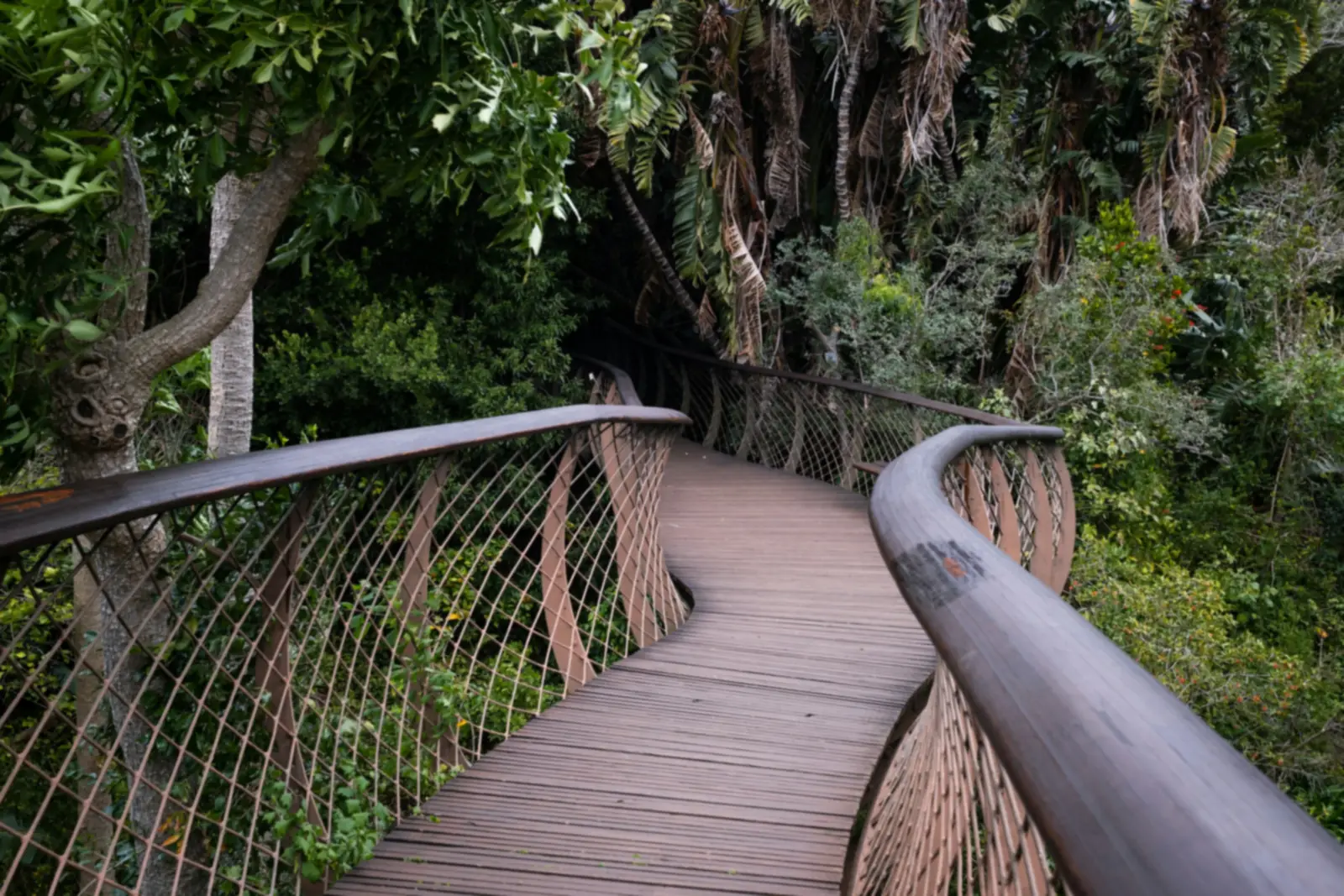
A client at Renewed Life Center lives on a gated property in Lakeside, in Cape Town’s Southern Suburbs, about two kilometres from Muizenberg beach, with staff on site 24 hours a day and a mountain ridge directly behind the grounds. The group programme runs Monday to Friday, 09:00 to 16:00, and the day starts at 06:30 and quietens at 22:30.
The fee covers accommodation, all meals, individual and group therapy, medical detox where clinically indicated, and both airport transfers, listed line by line below rather than as one figure. Rooms are shared or private, quoted separately, so say which one you want when you ask.
What the fee includes
- Private or shared accommodation
- All meals, prepared by our head chef
- Individual psychotherapy, typically 3 sessions per week in Phase 1
- Group therapy, 5 or more sessions per week
- Medical assessment by our resident GP
- Medical detox where clinically indicated, with 24-hour nursing supervision
- Trauma-informed care with EMDR, and equine therapy
- Family therapy sessions, also by video, plus a family meeting every Wednesday at 18:00 on Zoom
- Discharge planning and structured aftercare coordination
- Airport transfers, on arrival and on the way home
Dual diagnosis is treated in the same place as the addiction, on one plan, which matters given how common it is: nationally, 16% of people admitted to specialist treatment in South Africa, 1,115 individuals, presented with a dual diagnosis in the first half of 2025, and mental health problems, most often depression, anxiety or panic disorder, and sleep disorder, made up almost half of the named disorders among them, the SACENDU research brief reports. See dual diagnosis treatment in Cape Town and medical detox in Cape Town.
International flights and visa costs sit outside the fee, and we help international clients with the visa paperwork. For an ordinary day inside the programme, read what happens in rehab, day by day, and for how safe Cape Town itself is for a client arriving from abroad, read is Cape Town safe for rehab clients.
How do you get a price for a stay in Cape Town?
You ask us, and we send it. The first conversation is free, takes 20 to 40 minutes by WhatsApp, video or phone, and we reply the same day with the fee and the full list of what sits inside it. Admission can be immediate and typically happens within three days of first contact.
Every discharge includes a written relapse-prevention plan built for the client’s actual home environment, and we coordinate the aftercare that follows, plus family support while treatment is under way.
Book a free, confidential call: 20 to 40 minutes by WhatsApp, video or phone, with no obligation. We reply the same day.
Questions people ask
Because substance dependence is a prescribed minimum benefit, registered South African medical schemes must cover some hospital-based treatment, up to three weeks a year under code 182T. Outpatient treatment is not covered under the same regulation. Confirm the exact terms with your scheme in writing before admission.
Not for a Dutch resident with cover at home. Addiction care in the Netherlands is paid through the mandatory basisverzekering, so a Dutch client pays only the annual eigen risico, about €385 in 2026, for treatment at home. Private treatment in Cape Town sits outside that cover, so the decision is about privacy and setting rather than price.
DSD registration covers the treatment centre itself, under the Prevention of and Treatment for Substance Abuse Act. HPCSA registration covers individual clinicians, such as psychologists and doctors. A centre can have one without the other, so check both separately.
Admission can be immediate and typically happens within three days of first contact, after a free 20 to 40 minute call by WhatsApp, video or phone and a pre-admission assessment.
Usually, yes. Centres that separate the two quote a higher weekly rate for a private room. Ask each centre to quote both, in writing, rather than assume the headline figure covers the room type you want.
This article is general information, not medical advice.
Sources
- Prevention of and Treatment for Substance Abuse Act 70 of 2008, Government Gazette No. 32150 (21 April 2009)
- SANCA National: treatment
- Council for Medical Schemes: CMScript, focus on substance use disorders
- GOV.UK: South Africa, rehabilitation, recovery and residential treatment (1 August 2024)
- Health Professions Council of South Africa: registration overview
- National Institute on Drug Abuse (NIDA): Treatment (page updated 9 June 2025)
- SACENDU Research Brief, Vol 29 (1), 2026, South African Medical Research Council (published May 2026)
- CZ: vergoeding verslavingszorg (addiction care cover), 2026 eigen risico
Pricing rehab in South Africa? Ask us what a month in Cape Town covers.
A free first conversation, a written figure the same day, and admission that can be immediate and typically happens within three days of first contact.
Free first conversation of 20 to 40 minutes, by WhatsApp, video or phone. We reply the same day.
Leave a request for consultation
Tell us a little about the situation. The first conversation is free and confidential, and we reply the same day.